



Israel-Palestine Conflict: Historical Background, International Law and…
The Israel-Palestine conflict is a long-running dispute involving questions of territory, security, self-determination, displacement, settlements,…

The Israel-Palestine conflict is a long-running dispute involving questions of territory, security, self-determination, displacement, settlements, Jerusalem, refugees and competing national claims. The events beginning on 7 October 2023 significantly intensified the conflict and generated major questions under international humanitarian law, international human rights law and international criminal law. The legal and humanitarian situation has continued to develop, so descriptions based only on events in 2023 are no longer sufficient.
As of September 2026, United Nations reporting states that the ceasefire that took effect on 10 October 2025 ended large-scale hostilities but did not end violence or humanitarian concerns. UN reporting states that Israeli airstrikes, shelling, drone attacks and ground operations have continued, while Hamas and other armed groups have not disarmed. Most of Gaza’s population remains displaced and substantial parts of the Strip remain subject to severe access restrictions. Reported casualty figures should always be read with their source and verification status in mind.
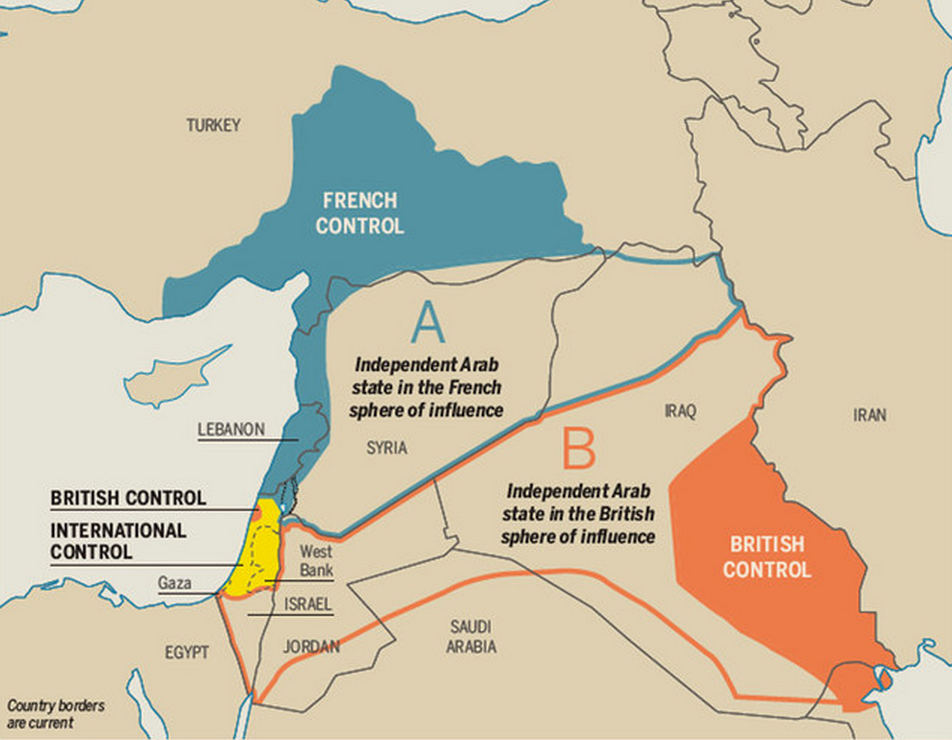
First, let’s talk about the root cause of the conflict. The origin of this fight dates back to the early 20th century. Before Israel became a state, the territory was part of the Ottoman Empire, and then later was under British control. During this time, the Jewish people were migrating to the area and buying lands to form their settlements, prompting pushback from the Palestinian Arab locals. After World War II, the United Nations decided to partition the area into two states – Israel and Palestine – but the decision was ultimately rejected by the Arab side, leading to years of fighting and tensions.
In recent years, the situation has become worse, with both sides accusing each other of aggression and violence. The key issues that divide the two parties include the status of Jerusalem, the issue of Israeli settlements, and the rights of Palestinian refugees. These are sensitive topics that have caused much debate and anger, and the recent confrontations have been a result of differences in opinion regarding these issues.
Israel has stated that they are defending themselves against the violent attacks from Hamas, a Palestinian militant group that controls Gaza. Meanwhile, the Palestinians are claiming that they are being subjected to unfair treatment and discrimination from the Israeli government. The situation is further complicated by the involvement of other countries, such as the United States, which has shown support for Israel, and other Arab countries that sympathize with the Palestinians.
As of now, the situation remains tense and uncertain. The death toll has continued to rise, and many innocent civilians have been caught in the crossfire. The international community has been putting pressure on both sides to come to a peaceful resolution to the conflict. However, achieving a peace agreement remains elusive, with both sides refusing to back down from their demands.
The Israel-Palestine conflict is a long-standing and complicated issue that has plagued the Middle East for over a century. Within this conflict, the Gaza Strip has become a major battleground between Israelis and Palestinians. The conflict in Gaza and its surrounding areas has taken the lives of countless civilians, devastating homes and communities, and leaving many feeling hopeless about any possible resolution. Understanding the historical background of the conflict is necessary to properly contextualize and comprehend both sides’ perspectives. In this blog post, we’ll dive into the history of this long-standing conflict and what has led to the current state of affairs.
The modern conflict developed through several historical stages. The territory was governed by the Ottoman Empire until the First World War and subsequently came under the British Mandate for Palestine. In 1947, the United Nations General Assembly adopted a partition plan proposing separate Arab and Jewish states, with a special international regime for Jerusalem. Jewish representatives accepted the plan while Arab representatives rejected it, and violence followed. The State of Israel was established in 1948, followed by war and large-scale displacement of Palestinians. The historical record includes competing national narratives and different legal and political interpretations, so the events should not be reduced to a single cause.
In 1948, Israel gained its independence, and the surrounding Arab nations attacked Israel, including residents of Gaza who, in many cases, lost their homes during the fighting. In the aftermath, Gaza became a part of Egypt until the Six-Day War in 1967. Israel successfully captured and occupied Gaza, along with other territories. Palestine’s successor government, the Palestinian Liberation Organization (PLO), started waging attacks against Israeli targets during the early 1980s.
Regionally, the conflicts increased, and the area was a scene of mass protests against Israel. The Intifada took place from 1987-1993 and again from 2000–2005. During the second Intifada, there were a multitude of suicide bombings conducted by Palestinian militants on Israeli soil. Israel, in turn, implemented a number of measures that would serve to isolate Gaza, including border closures, limited food supply, and other measures.
The conflict cannot be understood solely as a dispute between Israel and Gaza. Gaza is a territory within the broader Palestinian question, while the Palestinian political system has been divided between Hamas in Gaza and the Palestinian Authority and Fatah in parts of the West Bank. Hamas won the 2006 Palestinian legislative election and took control of Gaza in 2007 after armed conflict with Fatah. The political and security positions of the parties have changed over time, and statements about representation should therefore be made with care.
1. One of the primary reasons for the ongoing conflict is the territorial dispute over land. Israel believes it has a right to the land while the Palestinians claim ownership over it. The Israeli government and the Jewish diaspora consider the land as their ancestral homeland, which they have a right to reclaim. On the other hand, Palestinians argue that they have lived on the land for centuries and have a right to self-determination and sovereignty.
2. Another cause of the conflict is religious tensions. The land holds religious significance for both Jews and Muslims, and this amplifies tensions between the two groups. The Temple Mount in Jerusalem is a prime example of how the religious importance of a place can trigger violence. The compound is holy to Jews, who call it the Temple Mount, and to Muslims, who refer to it as the Noble Sanctuary. For decades, the two groups have fought over control of the site, leading to several violent clashes.
3. Politics also plays a significant role in the conflict between Israel and Gaza. The Israeli government is conservative and tends to favor a strong stance towards Palestinians. On the other hand, the Hamas government of Gaza seeks to end the Israeli occupation of the Palestinian territories and establish a state of their own. The ongoing conflict has deepened divisions in Israeli society, and the country is more polarized than ever. Similarly, the Palestinians are divided between Fatah and Hamas, which makes achieving a peaceful solution even more challenging.
4. The blockade on Gaza has also contributed to the tension between Israel and Palestinians. In 2007, Hamas seized power in Gaza, leading to a blockade by Israel and Egypt. The blockade has led to a humanitarian crisis in Gaza, with the population facing severe shortages of food, water, and medical supplies. This has led to a surge in anger and resentment against Israel, deepening the conflict.
5. Finally, the continued expansion of Israeli settlements in the West Bank has led to violent clashes between Israelis and Palestinians. Israel views the settlements as a way to secure its presence in the area, but Palestinians see them as a violation of their right to the land. The expansion of settlements has led to the displacement of Palestinians, making a peaceful resolution even harder to achieve.

Jerusalem has been a city of great significance for several millennia, with multiple religious traditions contesting its spiritual and cultural legacy. The city has always been a politically contested area, with control shifting hands between empires and kingdoms over centuries. The modern state of Israel, established in 1948, claimed Jerusalem as its capital city, whereas Palestinians want East Jerusalem to be the capital of their future state.
Since the 1967 Six-Day War, Israel has controlled all of Jerusalem, and the Israeli government has continued the policy of expanding settlements in the East Jerusalem area. This policy has been a significant point of contention for Palestinians and has contributed to the ongoing fight against Israel’s occupation of Gaza and the West Bank, as well as the larger struggle for a Palestinian state.
Jerusalem is an essential component of the Israeli-Palestinian conflict, as it holds immense cultural, religious, and political significance. Jerusalem is key to Judaism, Islam, and Christianity’s religious traditions, with both Israelis and Palestinians considering the city as a central part of their heritage and identity. For Israelis, Jerusalem has been and remains the heart and soul of their Jewish identity, while the Palestinians see their claim to the city as a reflection of their long history in the region.
One major complication in the Israeli-Palestinian conflict is the expansion of Israeli settlements in East Jerusalem, deemed illegal by most governments and international bodies. The constant expansion of these settlements causes Palestinians living in the city to be pushed out of their homes, leading to protests and confrontations. This expansion causes severe tensions in the region, contributing to the conflict between Israel and Palestine.
Another complication in the conflict is the role of the United States, which has always been a close ally of Israel and has recognized Jerusalem as its capital. The move from Tel-Aviv to Jerusalem of the US embassy in 2018 was seen by the Palestinians as a betrayal of the Palestine cause and further diminished any hope of the US playing a role as a mediator between the two sides.
Jerusalem holds immense importance for Muslims, and its significance is deeply rooted in Islamic history, tradition, and religious belief. Several key aspects highlight the significance of Jerusalem for Muslims:
Jerusalem holds immense importance for Jews for a variety of historical, religious, and cultural reasons. It is often referred to as the “eternal capital” of the Jewish people. Here are some of the key reasons why Jerusalem is significant for Jews:
Zionism is a word that you would often hear when discussing the ongoing conflict between Israel and Palestine. But what exactly is Zionism and why does it cause controversy? Zionism is a political movement that advocates for the establishment of a Jewish homeland in Palestine, which eventually led to the creation of the State of Israel in 1948. However, the concept of Zionism has evolved into different interpretations and issues over the years. In this blog post, we will explore the history, definition, and issues surrounding Zionism.
The history of Zionism can be traced back to the late 19th century when Theodor Herzl, a Jewish journalist, wrote a book called “The Jewish State” that proposed the creation of a Jewish homeland. Herzl believed that the only way to end the widespread anti-Semitism in Europe was for Jewish people to have their own state. The term “Zionism” was coined from the word “Zion,” which refers to the hill in Jerusalem where the Jewish Temple once stood.
Zionism gained support among Jews around the world, and in 1917, the British government, in the Balfour Declaration, expressed support for “the establishment in Palestine of a national home for the Jewish people.” However, the movement also faced opposition from Arab Palestinians who felt that they were being displaced from their land and would become a minority in their own country. This led to conflicts and wars in the region that continue to this day.
Zionism can be interpreted in different ways depending on who you ask. For some, it is a national liberation movement that aims to establish a safe haven for Jewish people. For others, it is a colonialist project that seeks to displace the Palestinian people from their land. There are also debates over whether Zionism should be based on secular or religious principles and how much emphasis should be placed on the cultural and historical ties to the land of Israel/Palestine.
The issue of Zionism is highly controversial, and there are various perspectives on it. Supporters of Zionism argue that the Jewish people have a right to their ancestral homeland and that Israel is a democratic country that promotes human rights, freedom of speech, and diversity. They also point out that Israel has made significant achievements in fields such as technology, medicine, and education despite its challenges. On the other hand, critics of Zionism argue that it has led to the displacement and marginalization of the Palestinian people, who have are facing human rights violations such as restrictions on movement, water and resource rights, home demolitions, and overbearing law enforcement.
The current situation in Israel/Palestine is complex, with many challenges that must be addressed to create lasting peace. Some advocate for a two-state solution, which would establish an independent Palestinian state alongside Israel, with Jerusalem as a shared capital. Others argue for a one-state solution, in which Jews and Palestinians would have equal rights in a democratic, binational state. However, all these solutions require significant efforts and consensus from both sides.
Hamas, the militant Islamic group, is considered by many as a terrorist organization and is known for its hostility towards Israel. This group came to power in Gaza in 2007 and has since maintained its grip over the region. It is essential to understand the formation of Hamas and how it gained control over Gaza to better comprehend the conflicts and tensions that exist in the Middle East. In this blog post, we will delve deeper into the historical background and political landscape that led to the formation of Hamas, its rise to power, and its control over Gaza.
The roots of Hamas can be traced back to the Muslim Brotherhood, a Sunni Islamist movement that had its beginnings in Egypt in the 1920s. The Muslim Brotherhood soon spread to Palestine, where it gained popularity among the disenfranchised Palestinian refugee population. In the late 1980s, the movement splintered, and a new group emerged, which became known as Hamas (an acronym for Harakat al-Muqawama al-Islamiya), meaning the Islamic Resistance Movement.
Hamas was founded in 1987, at the beginning of the first Intifada, a Palestinian uprising against the Israeli occupation of Gaza and the West Bank. Hamas was born out of the need for a unified, militant Palestinian opposition movement that could counter the Israeli military presence in the region. Hamas embraced a militant stance and became associated with suicide bombings and other forms of violence against Israeli civilians, a tactic that eventually drew international condemnation.
Hamas gained widespread acceptance among the Palestinian population, which saw the group as a symbol of resistance against Israeli oppression. Hamas also provided social welfare services to the Palestinians, such as health clinics, schools, and food distribution centers.
In 2006, Hamas contested the Palestinian legislative elections and won a parliamentary majority, defeating the long-dominant Fatah party led by Yasser Arafat. This turn of events led to political instability in the region, and tensions escalated between Hamas and the more moderate Fatah. In 2007, after months of fighting, Hamas staged a coup and seized control over Gaza, effectively splitting the Palestinian territories into two, with Hamas ruling Gaza and Fatah dominating the West Bank.
Since 2007, Hamas has maintained its grip over Gaza, using its military wing to enforce its rule and suppress rival factions. The group has implemented Sharia law and has banned political dissent and freedom of speech. Hamas has also been criticized for targeting Israeli civilians and using Gazans as human shields during conflicts with Israel.
The conflict between Israel and Palestine has been in the news for decades. Despite international calls for peace, the conflict has persisted, and the fighting has escalated at various times. While the conflict has a long and complex history, the fighting in Gaza has put the spotlight on the key issues and disputes that continue to fuel the conflict. This blog post aims to provide a comprehensive understanding of the ongoing war between Israel and Palestinians in Gaza.
One of the central issues in the conflict between Israel and Palestine is the status of Jerusalem. Both sides claim Jerusalem as their capital, and the city is home to some of the most sacred sites for both Jews and Muslims. The recent fighting in Gaza was triggered by clashes between Israeli police and Palestinian demonstrators in Jerusalem. For Palestinians, any attempt to control Jerusalem is seen as an attack on their identity, while for Israelis, Jerusalem is an important symbol of their history and religious heritage.
Another major issue in the conflict is the displacement of Palestinians from their homes. Over the years, Palestinians have been evicted from their homes to make way for Israeli settlements in the occupied territories. This has led to a deep resentment among Palestinians and a sense of loss of their homeland. The recent fighting in Gaza was fueled by the eviction of Palestinian families from their homes in the Sheikh Jarrah neighborhood in east Jerusalem.
The blockade of Gaza by Israel and Egypt has been a major issue in the conflict. The blockade has made it difficult for Palestinians in Gaza to access basic necessities such as food, water, and medical supplies. The lack of essential resources has contributed to the high levels of poverty and unemployment in Gaza. The recent fighting in Gaza was triggered by Hamas’ firing of rockets into Israel, which was in response to the police clashes in Jerusalem and the blockade of Gaza.
The conflict between Israel and Palestine has been further complicated by the issue of Palestinian statehood. Palestinians want a state of their own, with East Jerusalem as their capital. Israel, on the other hand, wants to maintain control of all of Jerusalem as its capital. The recent fighting in Gaza has once again highlighted the need for a peaceful resolution to the conflict, which includes the recognition of a Palestinian state.
The conflict between Israel and Palestine has been exacerbated by the involvement of external powers. The United States has been a key player in the region, providing military aid to Israel and mediating peace talks. Other countries, including Iran and Saudi Arabia, have also been involved in the conflict, providing support to different factions. The recent fighting in Gaza has once again highlighted the need for international diplomacy to resolve the conflict.
The recent conflict between Israel and Palestine has once again grabbed the world’s attention, leading to the loss of lives and destruction of infrastructure. The severity of the situation and the continuous news updates about the conflict may have many wondering about the role of the international community. Apart from regional players such as Egypt, Saudi Arabia, and Iran, other countries and organizations have also become involved in the crisis. In this blog post, we’ll explore the reasons behind international involvement in the Israel-Palestine conflict and explain the different levels and motives of engagement.
The principal international player in the Israel-Palestine conflict is the United States. The US has been very much involved since the start of the conflict and plays a significant role in leaders’ peace talks. The US’s involvement can be traced to the country’s foreign policy objective of promoting democracy and peace in the Middle East. Additionally, the country views itself as one of Israel’s closest allies, a relationship cemented by US military aids to Israel.
On the other hand, the United Nations (UN) has been involved in the conflict through its peacekeeping mission. The UN’s objective is to promote peacekeeping efforts, offer humanitarian aid to those affected by the conflict, and foster dialogue for long-term reconciliation.
Another key player is the European Union (EU). The EU tries to balance its support for Israel with its perceived impartiality, and it strives to ensure the conflict doesn’t spill beyond the Israel-Palestine borders. The EU has also been involved in the peace talks and has recently been more vocal in critiquing Israel’s human rights abuses.
Russia has historically supported Palestine and has attempted to negotiate peace talks between Israel and the Palestinians. Russia’s interest in the conflict is shaped by a desire to assert its influence in the Middle East and counter-balance the United Staes’ global leadership position.
China’s involvement in the conflict is mainly driven by economic interests, as the country has invested in setting up a high-tech zone in the Palestinian Territories and has been increasing its economic activities in the region.
The Israel-Palestine conflict also has an important international-law dimension. Depending on the circumstances, the applicable legal framework may include the United Nations Charter, the law of occupation, international humanitarian law, international human rights law and international criminal law. The legal classification of a particular act depends on the facts, the status of the territory and the rules applicable to the conduct in question.
International humanitarian law regulates the conduct of hostilities and protects persons who are not, or are no longer, participating directly in hostilities. Core principles include distinction between civilians and combatants, proportionality in attacks, precautions in attack and the prohibition of certain methods and means of warfare. The protection of civilians does not depend on which side they belong to.
In its advisory opinion of 19 July 2024 concerning the legal consequences of Israel’s policies and practices in the Occupied Palestinian Territory, including East Jerusalem, the International Court of Justice concluded, by the voting margins stated in its opinion, that Israel’s continued presence in the Occupied Palestinian Territory was unlawful and identified legal consequences for Israel, other States and international organisations. The opinion also addressed settlements, self-determination and the prohibition on acquisition of territory by force.
An advisory opinion is legally different from a judgment between two parties in contentious litigation. The 2024 opinion should therefore be distinguished from the separate proceedings concerning the Convention on the Prevention and Punishment of the Crime of Genocide. In that latter case, the Court has issued provisional measures; those measures are not a final determination on whether genocide has been established on the merits.
The International Criminal Court is investigating the situation in the State of Palestine. In November 2024, the ICC Pre-Trial Chamber issued arrest warrants for Benjamin Netanyahu and Yoav Gallant in connection with alleged Rome Statute crimes and also issued a warrant concerning Mohammed Diab Ibrahim Al-Masri (Deif). Proceedings concerning Deif were terminated in February 2025 following notification of his death. An arrest warrant is not a criminal conviction; it records the Court’s judicial determination concerning the applicable threshold for issuing the warrant.
The ICC proceedings should also be distinguished from proceedings before the ICJ. The ICJ deals with disputes between States and requests for advisory opinions, while the ICC is a criminal court concerned with individual criminal responsibility for crimes within its jurisdiction.
United Nations humanitarian reporting during 2026 has continued to describe severe humanitarian needs in Gaza. Reports have referred to widespread displacement, restricted access to essential services, damage to civilian infrastructure, water and sanitation problems, public-health risks and constraints on humanitarian operations. A September 2026 UN report stated that most of Gaza’s population remained displaced and that a large proportion of the Strip was inaccessible or subject to severe access restrictions.
The West Bank and East Jerusalem are also part of the wider legal and humanitarian context. UN reporting in 2026 has documented displacement, settler attacks, demolitions and damage to homes and infrastructure in different locations. Such reports should be read as reporting by the relevant organisation and should not be converted into unsupported conclusions about the criminal or legal responsibility of particular persons.
Casualty figures in an active conflict can change rapidly and may come from different authorities or organisations using different methodologies. A responsible legal-information article should identify the source, date and verification status of a figure rather than presenting a single number as an unquestionable fact. This is especially important when figures are reproduced from conflict parties or when independent verification is incomplete.
No. Religion is an important part of the history and identity of the region, particularly in relation to Jerusalem and other holy sites, but the conflict also involves territory, security, self-determination, displacement, refugees, settlements, governance and competing national claims.
The legal status and effective control of Gaza are subjects of international-law analysis. Different legal questions may require consideration of occupation law, territorial control, the conduct of hostilities and the rights of the Palestinian population. A simple description of Gaza as merely an ordinary sovereign State would not accurately reflect the legal complexities involved.
The West Bank is part of the territory commonly referred to in international law and UN practice as the Occupied Palestinian Territory, together with East Jerusalem and, in relevant legal contexts, Gaza. Its legal status has been addressed in international proceedings and UN resolutions.
Jerusalem has exceptional religious, historical and political importance. Israel regards Jerusalem as its capital, while Palestinians claim East Jerusalem as the capital of a future Palestinian State. The international legal status of territory occupied since 1967 and the status of Jerusalem remain central issues in the conflict.
The ICJ concluded that Israel’s continued presence in the Occupied Palestinian Territory was unlawful and addressed the legal consequences arising from policies and practices including settlement-related matters and interference with Palestinian self-determination. The opinion should be read in full and distinguished from the Court’s separate genocide proceedings.
The provisional-measures orders in the South Africa v. Israel proceedings are not the same as a final merits judgment. The Court’s provisional measures addressed obligations pending determination of the case; they should not be described as a final judicial finding that genocide has been established.
The ICC investigates and, where the legal requirements are met, prosecutes individuals for crimes within its jurisdiction, including genocide, crimes against humanity and war crimes. Its proceedings concern individual criminal responsibility and are distinct from State responsibility proceedings before the ICJ.
No. An arrest warrant is not a conviction. It is a judicial measure issued within the Court’s criminal process based on the applicable legal threshold and does not by itself establish guilt at trial.
International humanitarian law is the body of rules governing conduct during armed conflict. It seeks to limit the effects of armed conflict by protecting civilians and persons hors de combat and regulating methods and means of warfare.
No. Intentionally directing attacks against civilians is prohibited. The legality of a particular attack may also require examination of distinction, proportionality, precautions and the specific circumstances known to the attacking party.
In the conduct of hostilities, proportionality prohibits an attack expected to cause incidental civilian harm that would be excessive in relation to the concrete and direct military advantage anticipated. The assessment is fact-specific and cannot be reduced to comparing casualty numbers alone.
The two-state approach generally refers to an Israeli State and an independent Palestinian State existing alongside each other, with borders, security arrangements, Jerusalem, settlements, refugees and other issues addressed through a negotiated or otherwise agreed framework. Different proposals contain different territorial and institutional arrangements.
Zionism is a broad term used for movements and ideas concerning Jewish national self-determination and a Jewish national home or State. Its historical and contemporary forms are diverse. Descriptions of Zionism differ substantially among supporters and critics, and the term should be defined in context rather than treated as having one universally accepted political meaning.
Hamas is a Palestinian Islamist political and armed organisation founded in 1987. It won the 2006 Palestinian legislative election and subsequently became the de facto governing authority in Gaza after its 2007 conflict with Fatah. Several jurisdictions and organisations designate Hamas as a terrorist organisation, while legal classifications differ according to the jurisdiction concerned.
UN Security Council Resolution 2334 states that Israeli settlements in Palestinian territory occupied since 1967, including East Jerusalem, have no legal validity and constitute a major obstacle to a two-State solution. The ICJ’s 2024 advisory opinion also addressed settlement activity and the legal consequences arising from it.
The displacement of Palestinians is a central historical and humanitarian issue. Questions concerning refugees, return, compensation, resettlement and recognition of rights have formed part of diplomatic and legal discussions for decades. The precise rights and remedies depend on the applicable legal framework and circumstances.
Active conflicts generate competing accounts and rapidly changing information. Attribution allows readers to distinguish a party’s allegation or reported figure from an independently verified fact. This is particularly important when casualty figures, responsibility for an incident or military events are disputed.
No. UN reporting in September 2026 stated that the ceasefire ending large-scale hostilities had not ended violence, military operations or humanitarian concerns. The existence, scope and implementation of any ceasefire arrangement should therefore be assessed from current, dated reporting.
International accountability mechanisms can examine alleged violations of international law, preserve evidence, determine jurisdiction and, where their legal requirements are satisfied, impose or seek remedies. Their powers and procedures differ, and a pending investigation or proceeding should not be treated as a final finding of liability.
Legal analysis should distinguish established facts, allegations, judicial findings, political positions and humanitarian reporting. This is especially important in a continuing conflict where information can change and where different international institutions may address different legal questions.
The Israel-Palestine conflict has historical, political, humanitarian and legal dimensions that cannot be reduced to a single event or explanation. The events since 7 October 2023 and the developments through 2026 have generated continuing questions concerning civilian protection, humanitarian access, occupation, settlements, self-determination, accountability and the status of Jerusalem.
For readers approaching the subject from an international-law perspective, it is important to distinguish the roles of the ICJ, ICC, UN organs and other institutions; to distinguish advisory opinions, provisional measures, arrest warrants and final judgments; and to identify the date and source of factual claims. The situation remains subject to continuing developments, and any legal assessment of a particular incident requires consideration of the evidence and the applicable law at the relevant time.
Important Disclaimer
This article is provided solely for general legal information and public awareness. It is not legal advice, legal opinion, or a legal solution to any specific facts or circumstances. Laws and their interpretation may change, and the application of law depends upon the facts of each individual matter. Readers should not rely upon this article as a substitute for obtaining appropriate legal advice concerning their specific circumstances. Nothing contained in this article creates, establishes or constitutes an advocate-client relationship between the reader and Trident Legal Services, Advocate Nikhil Rathod, or any other person associated with the publication.



The Israel-Palestine conflict is a long-running dispute involving questions of territory, security, self-determination, displacement, settlements,…
