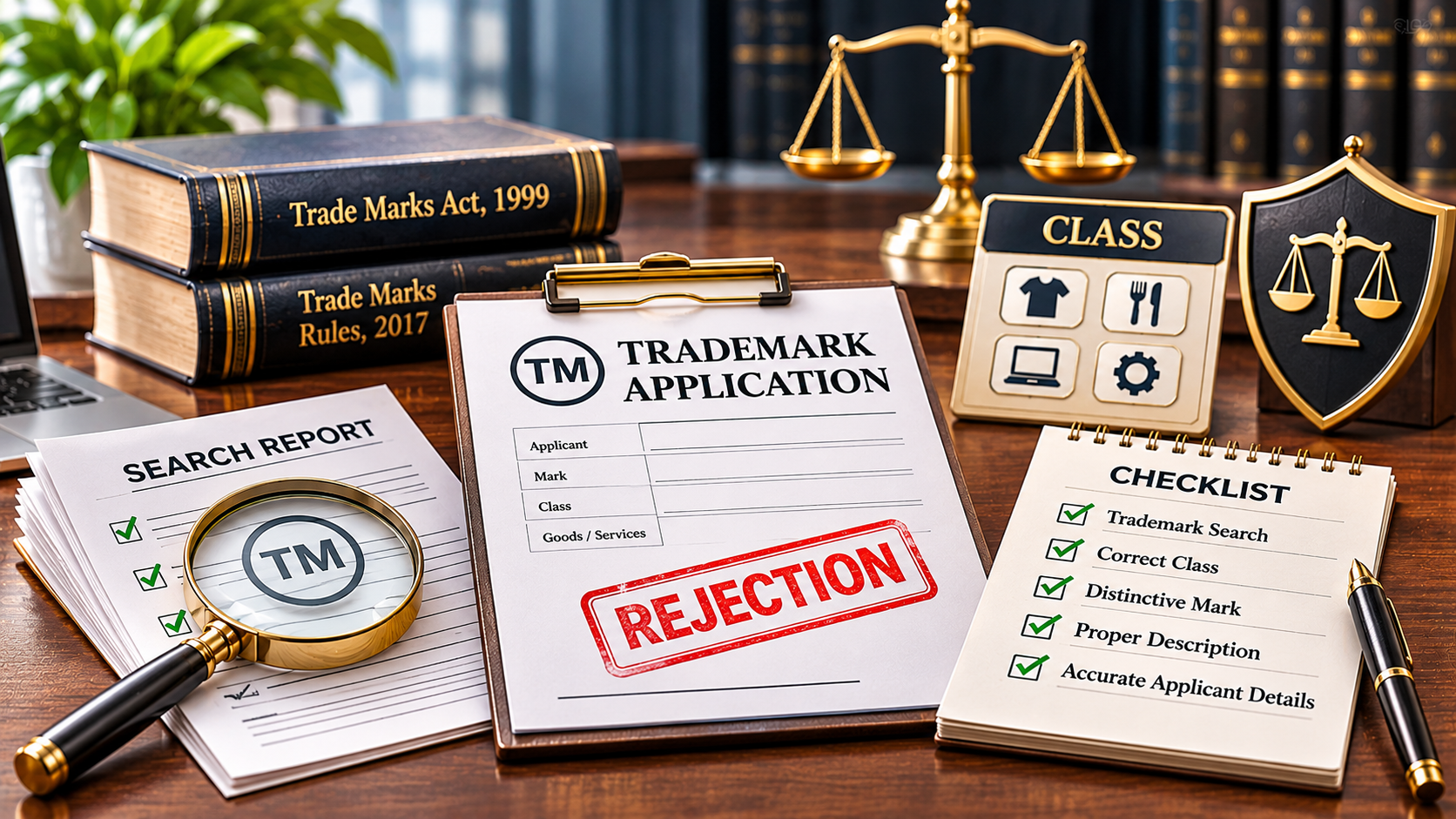
Trademark applications are frequently refused, delayed or challenged because applicants make avoidable errors when selecting, describing, filing or managing their marks. A filing receipt does not guarantee registration. Careful preparation can reduce procedural problems, improve the clarity of the application and help applicants respond to objections or conflicts.
1. Choosing a mark that is descriptive or generic
Marks that directly describe the nature, quality, intended purpose, characteristics or other features of goods or services may face objections under Section 9 of the Trade Marks Act, 1999. Generic expressions are generally not capable of distinguishing one trader’s goods or services. Before filing, assess whether the proposed mark is distinctive, suggestive, descriptive or commonly used in the trade. Adding a distinctive element or selecting a more original brand name may improve registrability, although the result always depends on the mark and the relevant goods or services.
2. Conducting an inadequate trademark search
Searching only the exact word in one class is risky. Similarity may arise from spelling, pronunciation, meaning, visual impression, transliteration or dominant elements. Search relevant classes, related goods/services, phonetic variants and similar marks in the IP India database. A search is a risk assessment—not a guarantee that an application will be accepted or that no one will challenge it.
3. Filing in the wrong class or an incomplete specification
Trademark protection is tied to the goods and services identified in the application and the applicable Nice Classification. Applicants should identify their current commercial activity and realistic planned expansion, then choose classes and descriptions carefully. Overly broad, vague or mismatched descriptions can lead to clarification, objections, unnecessary fees or gaps in protection. Do not assume that one class automatically covers every business activity.
4. Incorrect applicant name, legal status or ownership
Errors in the applicant’s name, constitution, address or ownership details may create complications in examination and later enforcement. Decide whether the mark belongs to an individual, partnership, LLP, company or other entity before filing. Ensure the applicant is the person or entity intended to own the trademark and that the application details match supporting records. A founder’s personal ownership and a company’s ownership are not interchangeable.
5. Claiming an inaccurate prior-use date
Applicants sometimes select an earlier date without reliable proof. When prior use is claimed, the user statement and supporting affidavit/evidence must be truthful and consistent with available records. Keep dated invoices, product packaging, advertisements, orders, website records and other corroborating material. If the mark is not yet used, the proposed-to-be-used option may be more appropriate than an unsupported date.
6. Submitting unclear or inconsistent representations of the mark
The mark representation should be clear and should correspond to the mark the applicant intends to protect. Device/logo applications should use a legible image; word-mark applications should accurately state the word or elements claimed. Variations between the mark image, word description, claimed colour and actual branding can create avoidable confusion. Consider separately filing the word element and logo where commercially and legally appropriate.
7. Ignoring disclaimers or non-distinctive elements
A mark may contain descriptive, customary or otherwise non-exclusive components. Applicants should understand that registration of a composite mark does not necessarily give exclusive rights over every component in isolation. Review the mark’s elements and any disclaimer or limitation that may be required or relevant; do not assume that a logo registration grants unrestricted exclusivity over common words or imagery.
8. Missing examination deadlines or failing to answer objections
After examination, the Registrar may issue objections in an examination report. Applicants should read each objection, identify the statutory ground, prepare a reasoned response with relevant documents and evidence, and monitor deadlines and hearing notices. A generic response that does not address the actual objections may be ineffective. Failure to respond within the applicable period can result in the application being treated as abandoned under the applicable rules and procedure.
9. Overlooking conflicts, opposition and third-party rights
Even if an application passes examination, it may be opposed after publication. Applicants should review similar earlier marks, assess coexistence or consent possibilities cautiously, and preserve evidence of adoption, use, reputation and business activity. A search and filing strategy should consider commercial risk, not merely whether the form can be submitted.
10. Not monitoring the application after filing
Filing is the start of a process, not the end. Monitor the status on the IP India portal, keep contact details current, check examination and publication updates, respond to notices, and track renewal obligations after registration. Delays in monitoring can lead to missed opportunities to correct problems or defend the application.
11. Practical pre-filing checklist
- Confirm the mark is distinctive and legally suitable.
- Search exact, phonetic, visual and conceptual similarities in relevant classes.
- Identify the correct applicant and verify ownership arrangements.
- Choose classes and descriptions that accurately cover the goods/services.
- Use a clear representation and decide whether word and device filings are needed.
- Verify the use date and collect supporting records, if claiming prior use.
- Check the application form, documents, address and email before submission.
- Maintain a calendar to monitor examination, opposition, hearing and renewal milestones.
Frequently Asked Questions
1. Does filing a trademark application mean it is registered?
No. Filing creates an application. It must proceed through examination and publication and remain subject to applicable opposition and registration requirements.
2. Can a descriptive mark be registered?
It may face absolute-ground objections. In appropriate cases, evidence of acquired distinctiveness through use may be relevant, but it is fact-specific and not automatic.
3. Is an online trademark search enough?
A search is an important first step but not a clearance guarantee. Searches should consider variants, similar marks, relevant classes and commercial context.
4. What if I choose the wrong class?
Protection may not cover the intended activity. Class selection and specification should be reviewed before filing; later changes are subject to legal and procedural limits.
5. Should I file the logo or the brand name?
It depends on the protection strategy. A word mark and a device mark protect different aspects, so separate filings may be considered where appropriate.
6. Can I claim prior use if I have no invoices?
Other evidence may be relevant, but any prior-use claim must be truthful and supported by reliable material. Do not claim a date that cannot be substantiated.
7. Can I change the application after filing?
Some amendments may be permitted, but material changes to the mark or specification may be restricted. Check the applicable rules and the particular application status.
8. What happens if I do not reply to an examination report?
Failure to respond within the prescribed time may lead to abandonment or other adverse procedural consequences. Monitor notices and seek advice on deadlines.
9. Can my trademark be opposed after examination?
Yes. Publication provides an opportunity for third parties to oppose within the prescribed period. Applicants should prepare to address opposition if filed.
10. How can I avoid filing mistakes?
Conduct a thorough search, confirm applicant ownership, choose classes carefully, verify use claims and representations, and monitor every procedural stage after filing.
Disclaimer
This article is for general informational purposes only and is not legal advice. Trademark registrability and procedure depend on the facts, mark, goods/services, evidence and applicable law. Reading this article or contacting the website does not create an advocate-client relationship.
Post Views: 37