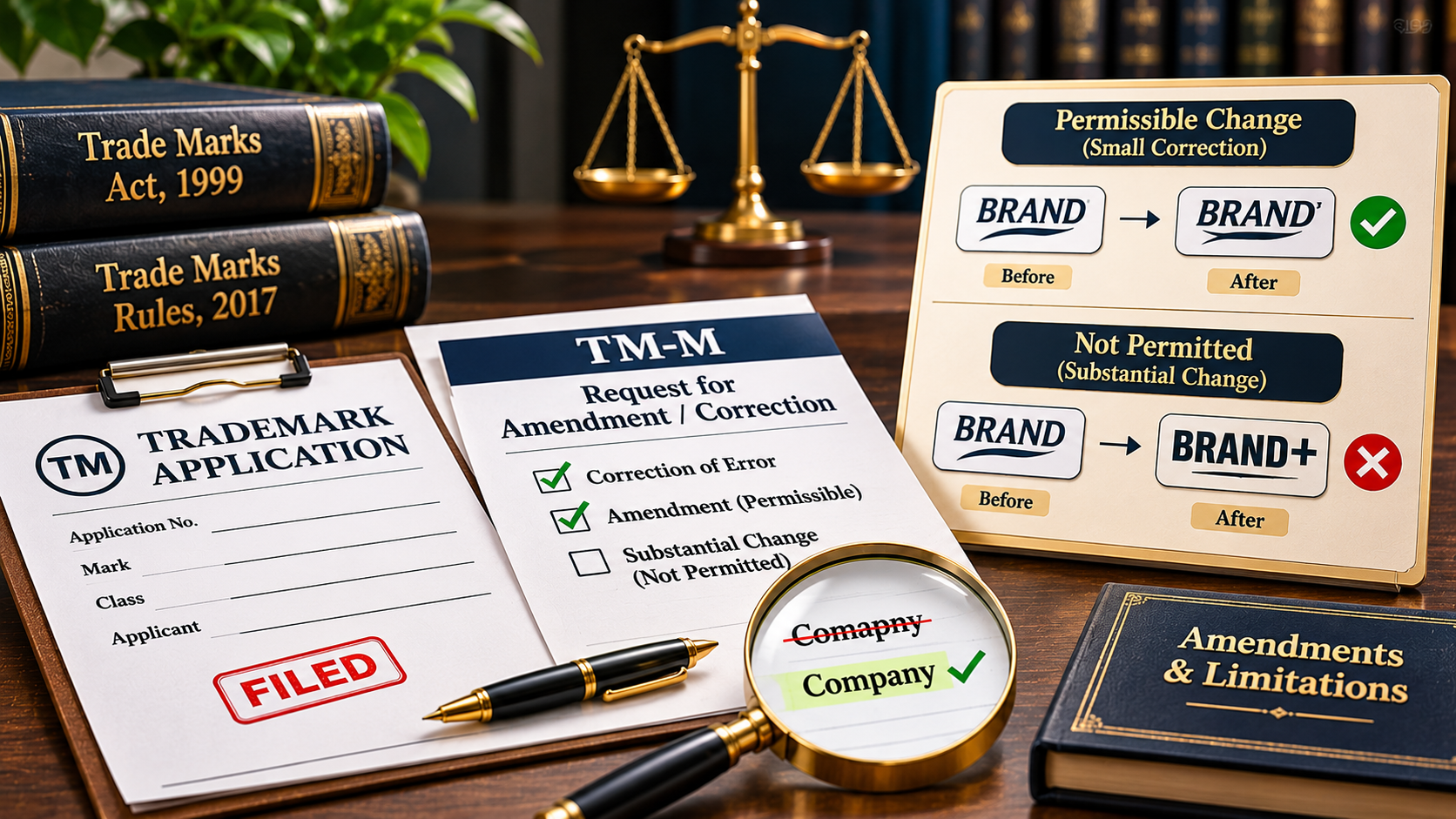
Trademark applicants sometimes discover after filing that the application contains a spelling error, incorrect applicant details, an incomplete specification or a representation that needs correction. Indian law permits certain corrections and amendments, but the ability to change an application is not unlimited. The nature of the proposed change, the stage of proceedings and whether the change alters the mark or expands the goods/services are important.
1. Legal basis for amendment of a pending application
Section 22 of the Trade Marks Act, 1999 empowers the Registrar, on just terms, to permit correction of an error or amendment of an application at any time before or after acceptance. Rule 37 of the Trade Marks Rules, 2017 provides a procedure for applying for correction or amendment using Form TM-M with the prescribed fee, before registration.
Rule 37 places a significant restriction: an amendment that substantially alters the trademark applied for or substitutes a new specification of goods or services not included in the application as filed is not permitted. Therefore, the amendment process should not be treated as an opportunity to replace the original mark with a different brand or introduce new goods/services after filing.
2. Common changes that may be requested
Depending on the facts and the Registrar’s consideration, applicants may seek corrections or amendments relating to errors in application details, address particulars, minor typographical mistakes, clarification of information, or permitted adjustments to the specification. Whether a specific change is allowed must be evaluated under the Act, Rules and the circumstances of the application.
- Correcting a genuine typographical error in applicant particulars.
- Updating or correcting address or contact information through the appropriate process.
- Correcting an obvious clerical error in the application record.
- Seeking a permissible amendment to the specification, subject to the restriction against introducing goods/services not included as filed.
- Correcting or clarifying procedural or form-related information where allowed.
3. What cannot ordinarily be changed through amendment?
An applicant cannot use an amendment to substantially alter the identity of the trademark. For example, replacing the filed word mark with a different word, materially redesigning a logo so it becomes a different mark, or changing the core brand identity may exceed the permissible scope. A new mark may require a fresh application and a separate filing strategy.
Likewise, Rule 37 expressly prevents substitution of a new specification of goods or services that were not included in the application as filed. Applicants should not assume that additional classes or entirely new goods/services can simply be inserted into a pending application.
4. How to apply for correction or amendment
- Obtain the filed application copy and identify the exact error or proposed change.
- Check whether the change is clerical, factual, substantive or affects the mark/specification.
- Review Section 22 and Rule 37 to assess whether the proposed amendment is within permitted limits.
- Prepare the request in Form TM-M, specify the correction or amendment precisely, and attach supporting documents where needed.
- Pay the prescribed fee and submit through the appropriate IP India filing route.
- Monitor the application for any query, order, advertisement or requirement from the Registry.
5. Supporting documents and explanation
Documents will depend on the correction. Applicant-name corrections may require supporting corporate or identity records; address corrections may require proof of the correct address; clerical corrections should be supported by the original form or document showing the error. A concise explanation should identify the filed detail, the proposed corrected detail and why the correction is requested. Avoid vague requests that leave the Registry uncertain about what is to be changed.
6. Amendments before and after examination or acceptance
Rule 37 allows a request before or after acceptance, but the procedural stage can affect consequences. If a change is made after advertisement, the Registrar may consider re-advertisement or notification of the amendment in accordance with Section 20(2) and Rule 40. A change affecting the mark, specification or user statement may have greater procedural implications than a simple clerical correction.
Applicants should therefore consider whether a proposed change could affect third-party search results, the scope of the published application or the rights of potential opponents. Timing and transparency are important.
7. Changing the trademark after registration
Once the mark is registered, the procedure is different from amending a pending application. Section 59 of the Trade Marks Act concerns alteration of a registered trademark and permits an application for leave to add to or alter the mark only in a manner not substantially affecting its identity. The registered proprietor applies in the prescribed manner, and the Registrar may refuse or grant leave subject to terms and may require advertisement.
A major rebranding or materially different logo should not be assumed to be covered by an alteration request for an existing registration. Consider a fresh application when the new mark has a materially different identity, and assess whether the original registration should remain in place.
8. Should you file a new application instead?
A fresh application may be appropriate where the change is material, the new brand is substantially different, new goods/services or classes are involved, or the applicant wants to protect a new version of the mark independently. A new filing has its own application date, fee and examination process. The choice should be made after considering priority, commercial use, coverage and existing registrations.
9. Mistakes to avoid
- Assuming every error can be corrected after filing.
- Trying to substitute an entirely new brand through an amendment.
- Adding goods or services that were not included in the original specification.
- Requesting a vague change without identifying the exact original and corrected entries.
- Ignoring the possible need for re-advertisement after amendment.
- Failing to check the application status and Registry communications after submitting TM-M.
- Confusing amendment of a pending application with alteration of a registered mark.
10. Practical amendment decision checklist
- Is the proposed correction factual or does it change the mark’s identity?
- Does it involve goods/services already included in the application as filed?
- Can the error be documented clearly?
- Has the application been examined, accepted, advertised or opposed?
- Could the amendment affect third-party interests or require re-advertisement?
- Would a fresh application be more appropriate?
- Have the prescribed Form TM-M and fee requirements been checked on the official portal?
Frequently Asked Questions
1. Can I change the trademark name after filing?
Not if the proposed change substantially alters the mark. A materially different brand name may require a fresh application.
2. Can I correct a spelling mistake?
A genuine clerical or typographical error may be considered for correction, subject to the applicable procedure and the Registrar’s decision.
3. Can I add another class after filing?
Do not assume a new class or specification can be added through amendment. Rule 37 restricts substitution of goods/services not included in the application as filed; additional coverage may require a separate application.
4. Which form is used for amendment of a pending application?
Rule 37 refers to Form TM-M with the prescribed fee for correction or amendment of a pending application.
5. Can I amend the application after acceptance?
Rule 37 permits an amendment request before or after acceptance but before registration, subject to the limits in the rule and the Registrar’s decision.
6. Will amendment require re-advertisement?
Depending on the circumstances, Section 20(2) and Rule 40 allow the Registrar to re-advertise or notify the amendment. The outcome is not automatic in every case.
7. Can I change the logo after registration?
Section 59 provides for alteration of a registered mark only in a manner that does not substantially affect its identity, subject to leave of the Registrar. A materially different logo may need a fresh application.
8. Can I expand my goods/services specification after filing?
Rule 37 restricts substituting a new specification for goods/services not included in the application as filed. Seek a fresh application where additional coverage is needed.
9. What documents should I attach to an amendment request?
Attach records that substantiate the proposed correction, such as identity, corporate, address or original filing records, depending on the nature of the change.
10. Is filing TM-M enough to guarantee approval?
No. The Registrar considers the request and may allow, refuse or impose procedural requirements depending on the law and facts.
Official legal references
Disclaimer
This article is for general informational purposes only and is not legal advice. Amendment permissibility depends on the nature of the mark, the original specification, application stage and Registry decisions. Reading this article or contacting the website does not create an advocate-client relationship.
Post Views: 60