

Mutual Divorce Settlement Agreement in Pune: Alimony,…
A practical legal guide to mutual divorce settlement agreements in Pune, covering alimony, child custody,…
EXCELLENT Based on 66 reviews
 Posted on Google
 Nabeel AkhtarFacing a criminal case can be stressful, but Advocate Nikhil Rathod made the entire process manageable. His strategic approach and strong representation gave me great relief.Posted on Google
 Srinath KarliAn experienced and sharp lawyer. Truly fast and great precise advocacy services offered. Highly recommended! Thankyou.Posted on Google
 SHIVA GAIKWAD
Trustindex verifies that the original source of the review is Google.
Good experience 👍👍👍👍Posted on Google Mangesh LawandeBest advocate for getting justice in Pune he is a very kind by nature 😊✨💫

Business ownership can make a mutual divorce settlement more complex because a spouse’s financial position may involve a proprietorship, partnership interest, private-company shares, professional practice, stock, business income, receivables, business loans or other commercial assets. A Section 13B petition may be comparatively straightforward, but the financial settlement can require careful identification of assets, liabilities and income.
A mutual divorce settlement should not assume that business assets can be divided in the same way as a jointly owned bank account or household item. The legal ownership of the business, the source of funds, the nature of the spouse’s interest, existing contractual restrictions, liabilities and applicable company or partnership documents can all affect the practical arrangement.
No. A decree of mutual consent divorce does not automatically transfer shares, partnership interests, business property or control of a company. The spouses may agree on a financial settlement involving business interests, but implementation depends on the legal ownership and the documents required for the relevant transaction.
For example, if a spouse owns shares in a private company, the settlement may provide for a monetary payment to the other spouse rather than transfer of shares. If the spouse is a partner in a firm, the settlement may address the value of the partnership interest, subject to the partnership deed and applicable law.
A proprietorship does not have a separate legal personality from its proprietor in the same way as a company. A settlement may take the value and income of the proprietorship into account for financial arrangements, but the parties should distinguish business assets from personal assets and business liabilities from personal liabilities.
Business bank accounts, equipment, inventory, receivables, tax liabilities and outstanding business loans should not be casually described as personal matrimonial assets without examining their actual ownership and liability structure.
Shares in a company are legally distinct from the company’s underlying assets. If one spouse owns shares in a private limited company, the settlement should distinguish between the shareholder’s interest and property owned by the company itself.
A settlement between spouses cannot simply transfer a company-owned property as though it were the shareholder’s personal property. If shares are to be transferred, the company’s constitutional documents, shareholder arrangements, applicable corporate requirements and transfer restrictions should be examined.
Parties may agree to a transfer or valuation of shares as part of a settlement, subject to the legal and corporate requirements applicable to those shares. Private-company shares may be subject to restrictions in the articles, shareholder agreements or other documents.
Where a monetary settlement is easier to implement, the parties may instead agree that one spouse retains the shares while making an agreed payment to the other spouse. The settlement should clearly state whether the payment is intended to resolve all identified financial claims relating to the business interest.
A partnership interest should be examined against the partnership deed, capital account, profit-sharing ratio, drawings, liabilities and any restrictions on transfer or retirement. The settlement may provide for valuation and a financial adjustment without requiring the other spouse to become a partner or receive a direct partnership interest.
If the spouse is retiring from the partnership or changing the ownership structure as part of the settlement, the relevant partnership documentation and consent requirements should be separately considered.
Business income may be relevant when parties negotiate maintenance, alimony, child support or a broader financial settlement. Income should be assessed from reliable records rather than from a single month’s receipts or an informal estimate of turnover.
Turnover, gross receipts, net profit, drawings, salary, dividends, retained earnings and personal expenses paid through the business can have different financial meanings. A settlement should identify the relevant income figure and the records supporting it where disclosure is necessary.
Self-employment can make income assessment more complicated because there may not be a conventional monthly salary. Relevant records may include income-tax returns, financial statements, bank statements, invoices, professional receipts, GST records where applicable, loan statements and other evidence of actual business activity.
The parties may agree on a fixed settlement amount, but they should understand the financial basis on which the settlement is being negotiated and record the scope of claims being resolved.
Business liabilities should be identified separately from personal matrimonial liabilities. A company loan, partnership liability or proprietorship business loan may have different borrowers, guarantors or security arrangements.
A spouse should not promise in a divorce settlement to release another person from a bank or business debt unless the lender or creditor has agreed to the relevant change. A private settlement may allocate responsibility between spouses but does not necessarily alter the creditor’s contractual rights.
There is no universal rule that a spouse automatically receives one-half of a business merely because the business was operated during the marriage. The legal position depends on the applicable matrimonial law, ownership structure, financial contributions, settlement terms and other relevant facts.
In a mutual divorce, the parties may voluntarily agree upon a financial adjustment that takes a business interest into account. That negotiated amount should not be described as an automatic statutory entitlement unless the applicable law clearly supports such a conclusion.
If the business interest is significant, the parties may consider an appropriate valuation method. Depending on the business, relevant information may include assets, liabilities, earnings, cash flows, goodwill, customer contracts, inventory, receivables and contingent liabilities.
A valuation should also identify its date and assumptions. A business may change in value between the date of negotiation and the date of final settlement, particularly where the business is closely held or dependent on a particular individual.
The appropriate financial records depend on the nature of the business. Common records may include income-tax returns, audited or unaudited financial statements, profit-and-loss statements, balance sheets, bank statements, capital accounts, partnership records, shareholding records, loan statements and material asset records.
Disclosure should remain proportionate to the settlement issue. The purpose is to establish a reliable financial picture rather than to create unnecessary disclosure of unrelated confidential business information.
The parties should distinguish the business activity from ownership of the premises. If the house is jointly owned or mortgaged, the property settlement should be addressed separately. If business equipment or stock is kept at the residence, the settlement should specify who will retain it and how access and removal will be managed.
A settlement may need to address not only ownership but also operational control and the transition period. The parties should specify whether one spouse will exit the business, whether employment or consultancy will continue temporarily, how outstanding receivables will be handled, and when access to business premises, accounts and records will change.
Directorship and shareholding are separate legal concepts. A settlement may require one spouse to resign from a board or transfer shares, but corporate records and applicable company-law procedures must be followed separately.
Parties may structure a financial settlement around a business interest, including by transferring shares, making a cash payment based on a valuation, or allocating particular assets. The settlement should clearly state whether the arrangement is intended to resolve identified maintenance, alimony and property claims.
A settlement should state the relevant cut-off date for the financial claims being resolved. If one spouse retains a business after the settlement, the agreement may specify whether future growth, future profits and future appreciation remain with that spouse, subject to the applicable law and the terms actually agreed.
Similarly, the settlement should address whether any undisclosed assets or liabilities discovered later are covered by the full-and-final clause, subject to the legal validity and enforceability of that clause.
Where children are involved, business income may be relevant to child-support arrangements. The settlement should distinguish the child’s financial needs from the spouses’ personal property and maintenance settlement.
Recent Supreme Court matrimonial matters demonstrate that financial settlements can involve substantial permanent alimony, stridhan, property-related claims and structured instalments. In May 2026, the Court recorded settlements involving permanent alimony and stridhan with specific payment arrangements. These decisions are fact-specific and do not prescribe a universal formula for valuing business interests or fixing alimony.
In another May 2026 decision, the Supreme Court considered factors including earning capacity, standard of living, duration of marriage, period of separation and financial security while determining a one-time permanent-alimony settlement. The decision illustrates why reliable financial information can matter in negotiating a matrimonial settlement, but it should not be treated as a fixed calculation applicable to every case.
A settlement should identify whether a business loan is taken by an individual, company, partnership or other entity, and whether either spouse has signed a personal guarantee. If a lender has rights against a guarantor, a private divorce settlement does not automatically release that guarantor.
If the parties agree that one spouse will assume a business liability, the settlement should state that this is an internal allocation between the spouses and should identify any additional step required to obtain the creditor’s formal release.
Before signing a mutual divorce settlement involving a business in Pune, the parties should prepare a business-and-financial schedule identifying the entity or business structure, ownership, income, liabilities, loans, guarantees, major assets, proposed valuation, settlement amount and implementation steps.
The schedule should be checked against available financial and corporate records. Where a transfer of shares, partnership interest or business property is proposed, the parties should identify the separate corporate, partnership, registration and tax steps required to implement the arrangement.
No. Divorce does not automatically transfer or divide business ownership.
There is no universal rule that automatically gives a spouse one-half ownership of a company. The position depends on applicable law, ownership, contributions and the settlement.
The parties may agree to address shares through transfer or financial adjustment, subject to applicable corporate and contractual requirements.
Yes. A settlement can address the financial value of a partnership interest, subject to the partnership deed and applicable law.
No. Turnover, expenses, profit, drawings, salary, dividends and retained earnings are different financial concepts.
Depending on the business, tax returns, financial statements, bank records, invoices, GST records where applicable and other reliable financial documents may be relevant.
The parties may agree on such an arrangement as part of their settlement, subject to the terms and implementation requirements.
The loan remains governed by its contractual terms. A settlement between spouses does not automatically release a borrower or guarantor from the creditor’s rights.
Company property belongs to the company and should not be treated as the shareholder’s personal property. Any transfer must comply with the applicable corporate and property law.
The parties may use an appropriate valuation method depending on the business and the financial issues being resolved.
The proprietor owns the business, but business and personal assets and liabilities should still be identified separately for settlement purposes.
The settlement should address ownership, operational control, employment or consultancy, access to records and the transition period separately.
Reliable income and earning-capacity information may be relevant to financial settlement and maintenance negotiations, depending on the applicable law and circumstances.
Parties may structure a settlement using property or business interests as part of the financial arrangement, subject to applicable legal and implementation requirements.
Financial disclosure and reliable records may become relevant. The consequences depend on the proceeding, settlement and applicable law.
A private matrimonial settlement generally does not alter a creditor’s contractual rights without the creditor’s participation or approval where required.
Directorship and shareholding are distinct legal positions.
The settlement can define the financial cut-off and state how future income or appreciation will be treated, subject to applicable law and enforceability.
The settlement should specify whether one spouse exits, whether the business is sold, or whether another agreed ownership structure will continue, along with the required documentation.
Business ownership, business income, business liabilities and the spouses’ personal financial claims should be separately identified before a comprehensive settlement is signed.
Important Disclaimer
This article is provided solely for general legal information and public awareness. It is not legal advice, legal opinion, or a legal solution to any specific facts or circumstances. Laws and their interpretation may change, and the application of law depends upon the facts of each individual matter. Readers should not rely upon this article as a substitute for obtaining appropriate legal advice concerning their specific circumstances. Nothing contained in this article creates, establishes or constitutes an advocate-client relationship between the reader and Trident Legal Services, Advocate Nikhil Rathod, or any other person associated with the publication.
+91 820 890 9423
desk@tridentlegal.in
Flat No. 302, Kalunkhe Niwas, Khopade Nagar, Gujaewadi, Katraj, Pune - 411041


I was really impressed with Trident Legal and Advocate Nikhil Rathod. Even though they just started,
Trident Legal and Advocate Nikhil Rathod are really good at what they do. Even though they
I had a great experience with Trident Legal and Advocate Nikhil Rathod. Even though they are
Trident Legal, with Advocate Nikhil Rathod, is like a rising star in the legal world. I
I was lucky to work with Trident Legal and Advocate Nikhil Rathod. Even though they just
Trident Legal and Advocate Nikhil Rathod are really amazing! They helped me with legal stuff and
Trident Legal and Advocate Nikhil Rathod are like superheroes! They are really good at legal stuff
I wasn’t sure about Trident Legal because they are new, but they surprised me! Advocate Nikhil
I had the honor of working with Trident Legal and Advocate Nikhil Rathod. They were really
Trident Legal, led by Advocate Nikhil Rathod, is like a superhero in the legal world. Even

A practical legal guide to mutual divorce settlement agreements in Pune, covering alimony, child custody,…
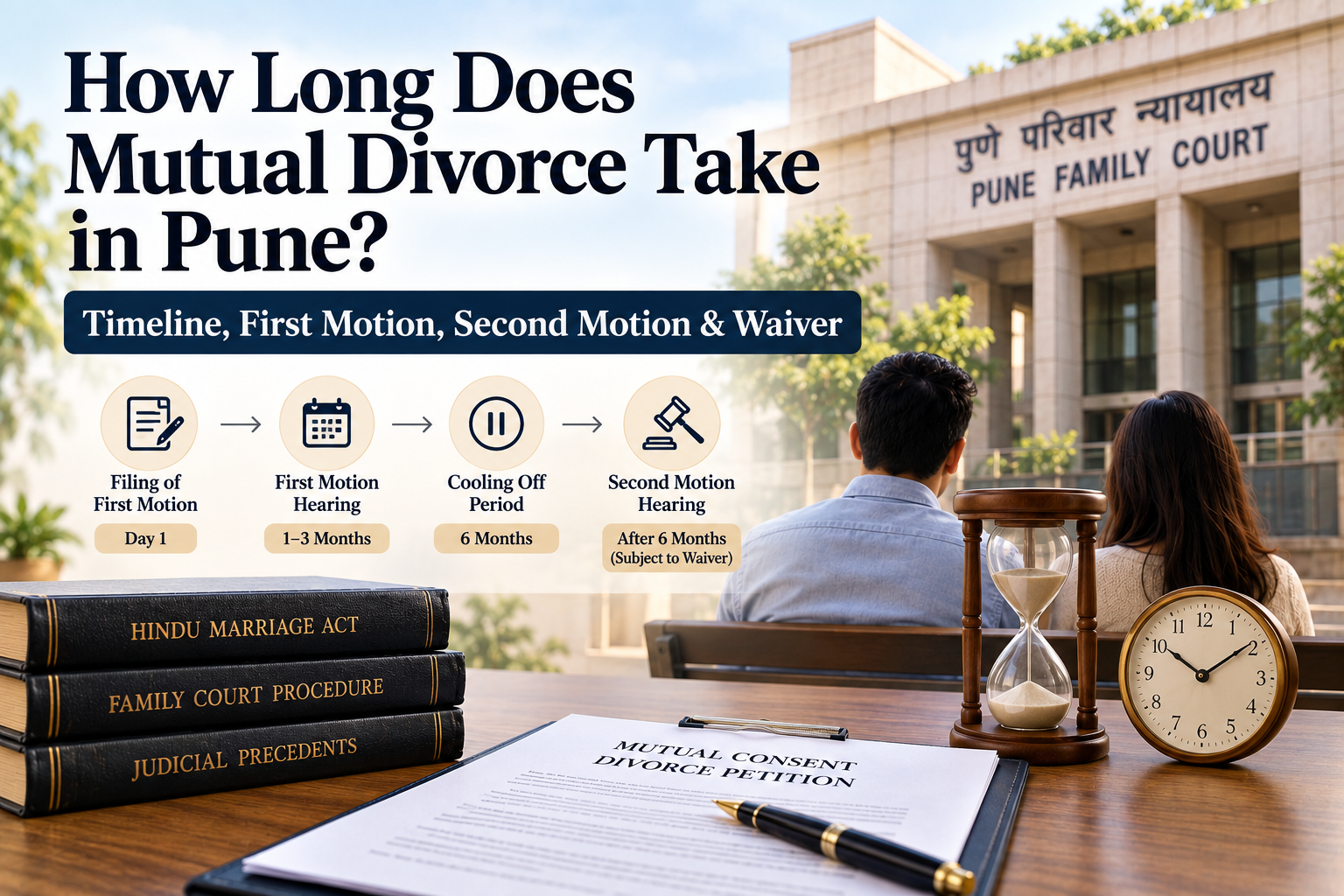
Understand how long mutual divorce takes in Pune, including the one-year separation requirement, first motion,…

A complete guide to mutual consent divorce in Pune, covering Section 13B, eligibility, documents, first…
A legal guide to motor accident claims in India covering MACT procedure, documentation, compensation, insurance,…
