A logo or brand name may become a business’s most valuable commercial asset. Customers often recognise a word, symbol, lettering style or emblem before the company name. Indian law may protect these identifiers through trademark registration and, for original artwork, copyright. Trademark law protects source-identifying use; copyright protects qualifying artistic expression. Businesses should plan both and confirm artwork ownership before launch.
1. What can be protected as a trademark?
Section 2(m) of the Trade Marks Act, 1999 includes a device, brand, label, name, word, letter, numeral, shape of goods, packaging, combination of colours and other listed matter within “mark.” Section 2(zb) requires a trademark to distinguish one person’s goods or services from those of others. Logos, symbols, stylised lettering, mascots and distinctive labels may qualify if they satisfy the Act.
Example: A café may use a name, cup emblem and label design. Each element may have a separate role; assess which features are distinctive and how customers encounter them.
2. Word mark and device mark: consider separate filings
A word-mark application seeks protection for distinctive wording independent of its graphic presentation. A device-mark application covers the submitted visual representation—such as a symbol, stylised text or label. Logo registration alone may not provide the same practical scope for the name used in plain text.
Where budget permits, a business may consider separate applications for its core word mark and logo. Each is examined independently. For instance, “BLUE ORBIT” and its crescent-and-stars graphic may need different protection: separate filings can help address use of the name without the artwork or copying the artwork under another name.
3. Scope and limits of trademark registration
Sections 18 and 28 concern applications and rights arising from registration; Section 29 addresses infringement. Rights relate to the registered mark and specified goods or services, subject to statutory limits. Section 17 generally protects a composite mark as a whole, not every component. Common, non-distinctive or unregistered elements cannot automatically be monopolised simply because they appear in a registered label.
Unregistered marks may be protected through passing off under Section 27(2). Prior use, goodwill, confusion and defendant conduct can matter. See Passing Off vs. Trademark Infringement.
4. Clearance searches before adopting artwork
Search IP India’s trademark database before spending on packaging, signage or advertising. Search the name, spelling variations, phonetic equivalents, device elements and relevant Nice classes. Exact-match or single-class searches may miss conflicts.
Compare overall impression, dominant elements, pronunciation, meaning, customers and sales channels. A change in font or colour does not necessarily avoid confusion. A designer’s originality statement is not a substitute for a trademark search.
5. Filing a device-mark application
File in Form TM-A through IP India’s e-filing portal. Identify the proprietor, submit a clear representation, specify goods/services and class(es), and state whether the mark is proposed to be used or has prior use. A prior-use claim should be supported by evidence and affidavit.
Official online fee is generally ₹4,500 per mark per class for an individual, startup or small enterprise, and ₹9,000 for other applicants. Verify eligibility and fees at filing. The representation should match the logo version sought to be protected; reflect any colour claim accurately.
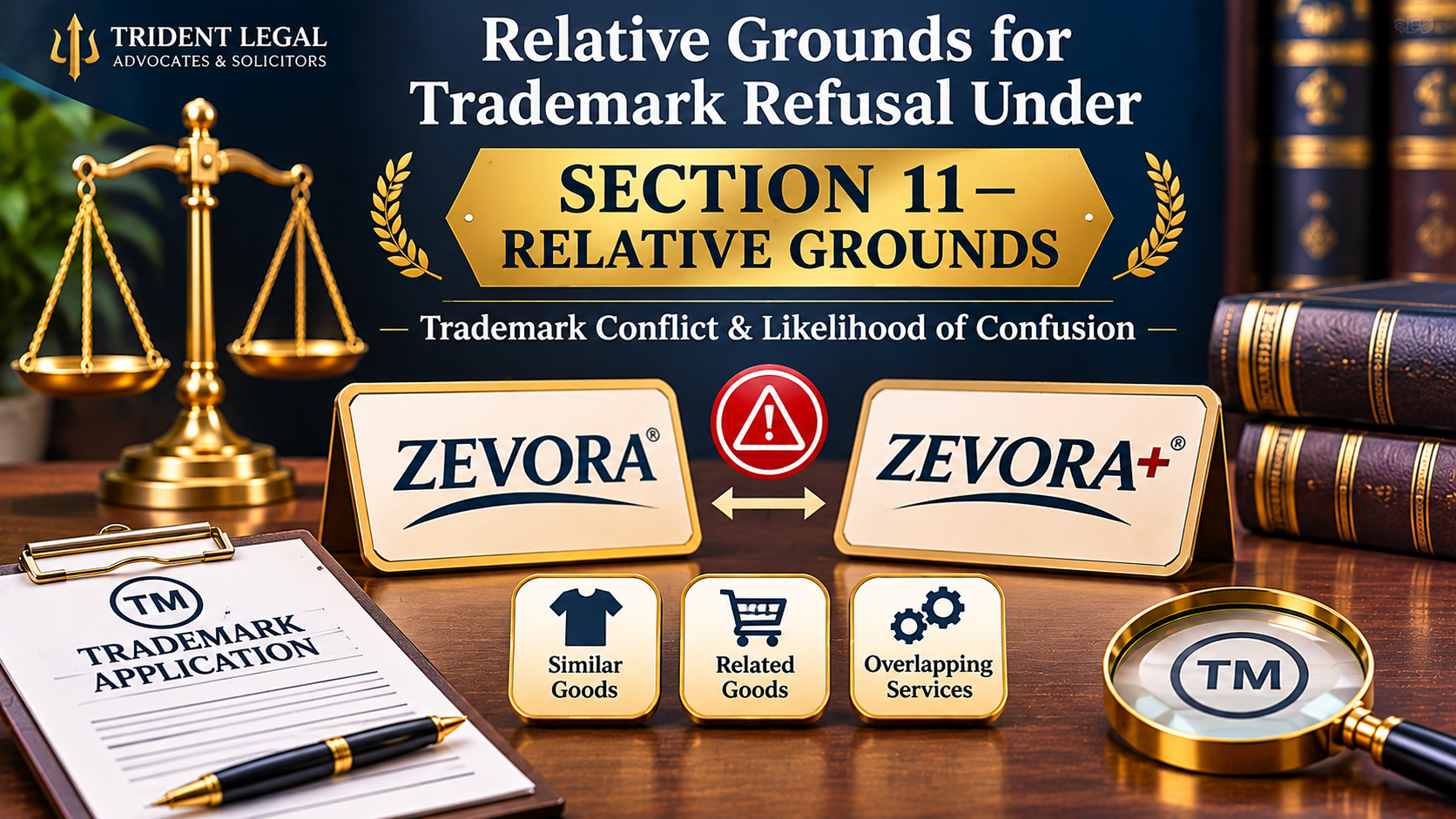
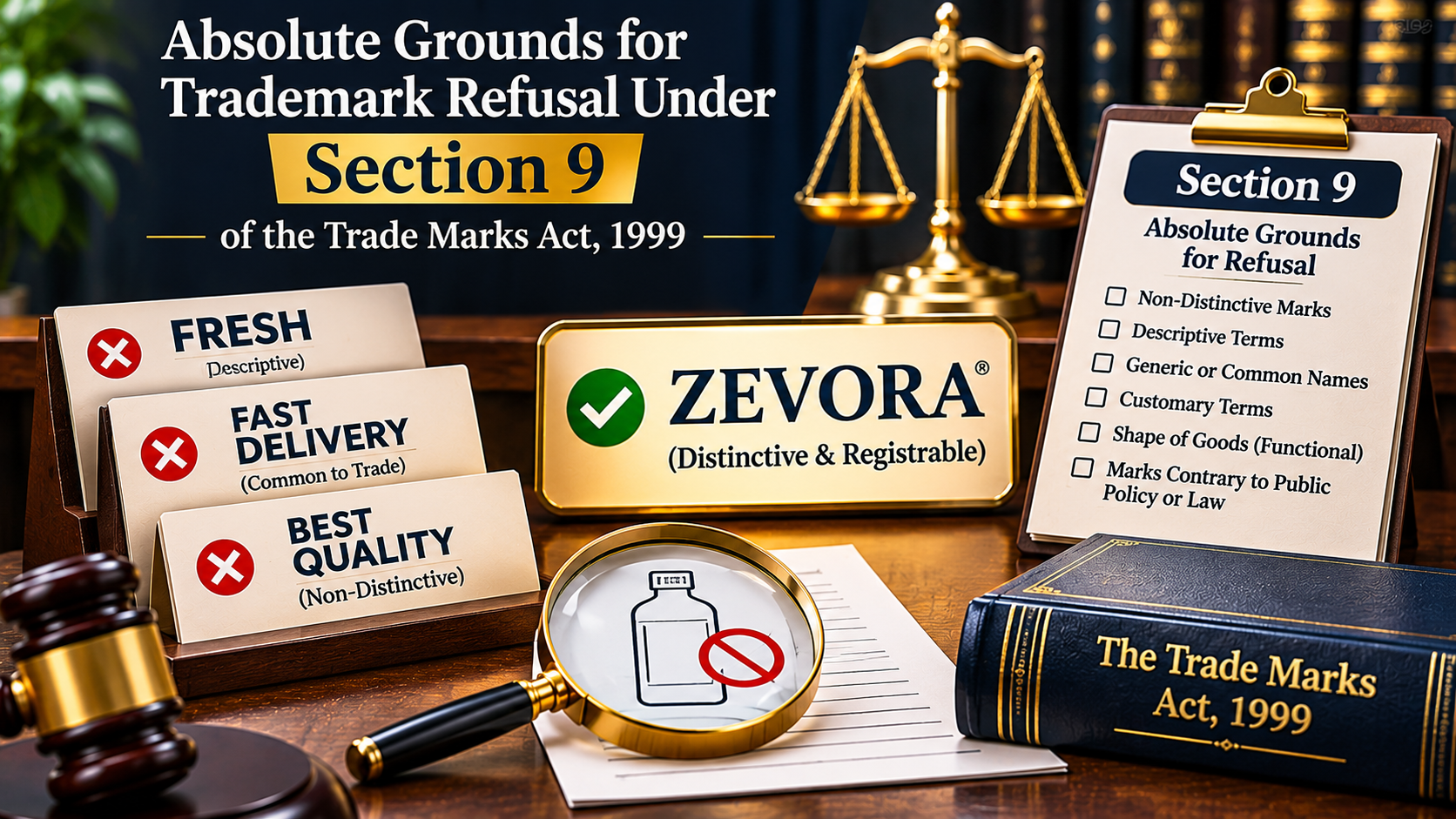
Examination may raise Sections 9 or 11 objections. A reply or hearing may follow. Accepted applications are published in the Trade Marks Journal for opposition; registration comes only after the statutory process.
6. Who owns the logo? Put the transfer in writing
Trademark and copyright ownership are different. A logo may qualify as original artistic work under Section 2(c) of the Copyright Act, 1957. Copyright generally arises on creation, but first ownership depends on the Act and how the work was made.
Section 17 contains first-owner rules and exceptions. Paying a freelancer or receiving an image file does not necessarily transfer all rights. Use a written assignment identifying the artwork and rights transferred, territory, duration, consideration, adaptations, editable files, third-party assets, warranties and cooperation with enforcement. Section 19 contains assignment requirements; avoid relying on a vague invoice.
7. Copyright and trademark overlap
Copyright may protect original logo artwork, but ordinarily does not protect a business name or short phrase by itself. Trademark law protects source-identifying use. Copyright registration is not generally required for rights to arise.
Section 45 of the Copyright Act requires a statement and Trade Marks Registry certificate for registration of artistic work used or capable of use in relation to goods or services. In Heineken Asia Pacific Pte. Ltd. v. Vijay Keshav Wagh (Delhi High Court, 10 March 2026), the Court ordered rectification of a copyright registration for artwork found to substantially copy the TIGER device logo. It illustrates the safeguards where trademark and copyright artwork overlap.
8. Copyright versus design protection
Section 15 restricts copyright in designs registered under the Designs Act and addresses unregistered designs capable of registration that are industrially reproduced more than fifty times. This is fact-specific, not a blanket rule for every logo. In Cryogas Equipment Pvt. Ltd. v. Inox India Ltd., 2025 INSC 483 (Supreme Court, 15 April 2025), the Court examined the copyright/design boundary and emphasised assessing the nature of the work. Decorative graphics applied to manufactured products may warrant design-law review.
9. Evidence and remedies for copied logos
Keep dated logo files, briefs, drafts, assignment documents, certificates, invoices, packaging, advertisements and website captures. If copying occurs, preserve product photos, listing URLs, screenshots, seller details, customer messages and purchase records before sending a notice or complaint.
Facts may support Section 29 infringement, passing off, copyright infringement or multiple grounds. Section 135 may provide injunctions, damages or accounts of profits, and delivery-up of infringing labels/materials. Platform takedowns help but do not replace court remedies.
10. Logo-protection checklist
- Search the name, phonetic variants and device.
- Decide whether to file word mark, device mark or both.
- Identify the proprietor and relevant classes.
- Sign a written copyright assignment or licence.
- Keep original sketches, editable files and approved versions.
- Retain dated use evidence and use the mark consistently.
- Monitor marketplaces, websites, domains and social handles.
- Track applications, renewals and ownership updates.
Frequently asked questions
1. Can I register a logo separately from the brand name?
Yes. Word and device marks can be separate applications, each assessed independently.
2. Is registration required to use ™?
No. ™ indicates a claimed mark. Use ® only for a registered mark and within its registration scope.
3. Does a device mark protect the name in every font?
Not necessarily; a separate word-mark application may be useful for wording independent of graphic layout.
4. What is the online filing fee?
Generally ₹4,500 per mark/class for eligible individual, startup and small-enterprise applicants, or ₹9,000 for other applicants. Check the schedule.
5. Does payment transfer copyright to the client?
Not automatically in every case. Ownership depends on the Act and agreement; use a written assignment or licence.
6. Can a logo have copyright and trademark protection?
Potentially. Trademark protects source-identifying use; copyright may protect original artwork.
7. Can I stop a similar logo in an unrelated industry?
Sometimes, if legal requirements such as reputation, confusion, dilution or unfair association are established.
8. Can I claim a common symbol exclusively?
Not automatically. Section 17 limits claims to common or non-distinctive components, though a distinctive combination may be protected.
9. Is copyright registration mandatory?
No, copyright generally arises automatically in original qualifying work; Section 45 has a special certificate requirement for certain artwork registrations.
10. What if my logo is copied?
Preserve evidence, confirm ownership and registrations, assess infringement or passing off, and consider notice, platform reports or civil proceedings.
Official sources and related reading
This is general information, not advice on a particular mark or dispute. Check current Registry fees and procedures before filing.
Post Views: 293