
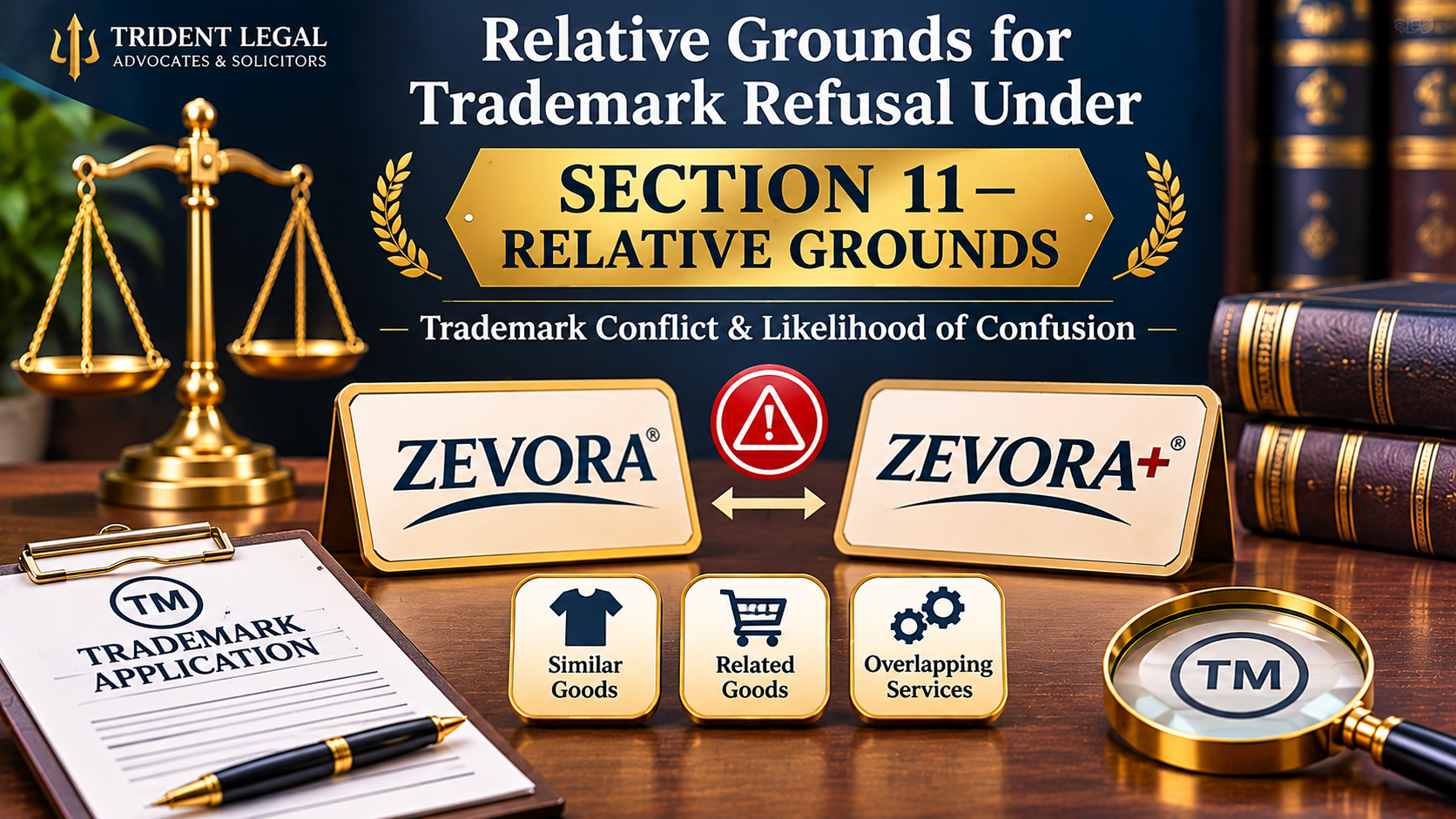
Relative Grounds for Trademark Refusal Under Section…
Understand relative grounds for trademark refusal under Section 11 in India, including earlier marks, similarity,…
EXCELLENT Based on 66 reviews
 Posted on Google

 Nabeel AkhtarFacing a criminal case can be stressful, but Advocate Nikhil Rathod made the entire process manageable. His strategic approach and strong representation gave me great relief.Posted on Google
 Srinath KarliAn experienced and sharp lawyer. Truly fast and great precise advocacy services offered. Highly recommended! Thankyou.Posted on Google
 SHIVA GAIKWAD
Trustindex verifies that the original source of the review is Google.
Good experience 👍👍👍👍Posted on Google Mangesh LawandeBest advocate for getting justice in Pune he is a very kind by nature 😊✨💫

Mutual divorce is based on the continuing consent of both spouses. Under Section 13B of the Hindu Marriage Act, 1955, the parties jointly approach the court stating that they have been living separately for the prescribed period, are unable to live together, and have mutually agreed that the marriage should be dissolved. Because consent is central to the statutory scheme, a spouse may have concerns about withdrawing consent after the petition has been filed, after the first motion, during the six-month period, or before the second motion.
The legal position is not the same as saying that a settlement document automatically makes divorce compulsory. The court must consider the statutory requirements for a decree by mutual consent, and the consent required for the decree must continue to exist at the relevant stage. The Supreme Court reiterated this principle in Dhananjay Rathi v. Ruchika Rathi, decided on 13 April 2026, observing that mutual consent should continue until the divorce decree is passed and must be valid and subsisting when the matter is heard. The decision arose in its own factual and procedural setting and should not be read as creating an unrestricted rule for every matrimonial settlement.
As a general statutory principle, a spouse cannot be compelled to give continuing mutual consent merely because a Section 13B petition was filed jointly at an earlier stage. If one spouse genuinely withdraws consent before the decree is passed, the foundation for a decree by mutual consent may cease to exist. The precise procedural consequence depends upon the stage of the case, the pleadings, the settlement terms, any orders already passed, and the conduct of the parties.
Withdrawal of consent does not necessarily mean that every settlement term becomes irrelevant. A court may still have to examine separate questions concerning money already paid, property transferred, possession, withdrawal of other proceedings, undertakings, or alleged breach of a settlement. Those issues are distinct from the statutory requirement of continuing consent for a mutual-consent divorce.
Section 13B(1) provides the statutory basis for a joint petition for divorce by mutual consent. Section 13B(2) contemplates a further motion after the statutory interval, subject to the law governing waiver of that period. The second stage is important because the court must be satisfied that the statutory conditions for granting the decree continue to exist.
Therefore, filing a first-motion petition should not be understood as an irrevocable declaration that a spouse can never change their position. The court must examine whether the required consent remains present when the decree is sought.
If the parties have only negotiated a settlement and have not yet filed a joint Section 13B petition, either spouse can ordinarily decide not to proceed with a mutual divorce. The consequences of a separately executed settlement agreement may still need examination if money, property, or other obligations have already been exchanged.
If one spouse changes their position after the first motion has been recorded but before the decree is passed, the court may have to consider whether the required continuing consent exists. The earlier filing itself does not remove the statutory requirement of mutual consent at the stage of decree.
The six-month period under Section 13B(2), where applicable, gives parties time before the second motion. During this period circumstances may change, including financial arrangements, child-related issues, property arrangements, or the willingness of either spouse to proceed.
The Supreme Court has treated the six-month period as directory rather than an inflexible bar in appropriate cases, subject to the principles governing waiver. Waiver of the waiting period does not eliminate the requirement of continuing consent. These are separate legal questions.
If a spouse does not confirm the mutual-consent position at the second stage, the court must consider whether the statutory foundation for a mutual-consent decree remains satisfied. A spouse should not assume that a prior first-motion statement automatically substitutes for the consent required at the later stage.
A settlement may contain detailed financial and non-financial obligations, but a settlement and a divorce decree are not necessarily the same legal instrument. If a spouse alleges that the settlement was obtained through coercion, fraud, undue influence, misrepresentation, non-disclosure, or material breach, the court may have to examine those allegations according to the applicable law and facts.
The answer depends upon the procedural posture and the orders already passed. If the mutual-consent decree has not yet been granted and one spouse genuinely refuses to continue with consent, the court ordinarily cannot simply treat the original joint petition as an irrevocable consent to divorce. The parties may have to address the consequences before the Family Court and, where appropriate, pursue another legally available matrimonial remedy.
Non-appearance should not automatically be treated as an established withdrawal in every factual situation. The court may consider whether the absence was deliberate, whether notice was served, whether there was an application seeking adjournment, whether there are allegations concerning settlement compliance, and what procedural orders have already been passed.
Not necessarily. This is an important distinction. Withdrawal of consent to the divorce and enforceability of a settlement can involve different questions. For example, if a settlement required payment of money in exchange for specified reciprocal obligations, a dispute may arise about whether payment was made, whether conditions were fulfilled, whether the settlement was accepted by the court, and whether any part of it has independent legal effect.
A spouse should therefore avoid assuming that withdrawal automatically permits retention of money, property, documents, jewellery, or other benefits received under a settlement. Conversely, the existence of a settlement does not by itself mean that the court must grant a mutual-consent divorce after consent has genuinely ceased.
A material failure to perform agreed settlement obligations can be relevant to the parties’ decision to proceed with the second motion. Common examples include failure to pay an agreed amount, failure to return stridhan, failure to transfer or release property, failure to close or withdraw specified proceedings, or failure to comply with agreed arrangements concerning children.
The exact legal consequence depends on the wording of the settlement and the procedural stage. A settlement should therefore specify payment dates, instalments, conditions, property documentation, withdrawal or quashing of proceedings, child-related arrangements, and consequences of non-compliance with sufficient clarity.
The statutory concept of mutual consent requires actual consent from both spouses. A court may pass appropriate orders in accordance with law concerning a settlement, pending proceedings, or other issues, but a party should not assume that the filing of a joint Section 13B petition gives the other spouse an automatic entitlement to a mutual-consent decree after consent has been withdrawn.
The Supreme Court’s exercise of power under Article 142 of the Constitution in particular cases should also be distinguished from the ordinary jurisdiction of a Family Court. Article 142 orders are fact-specific exercises of the Supreme Court’s constitutional power and should not be treated as a routine substitute for the statutory requirements applicable before a Family Court.
Parties should distinguish between a temporary dispute about an implementation detail and a genuine withdrawal of consent. If the disagreement concerns an unpaid instalment, transfer document, custody schedule, property possession, or another settlement term, mediation may sometimes help the parties resolve the specific issue without abandoning the entire settlement.
The Supreme Court has continued to emphasise mediation and consensual resolution in family disputes. In September 2026, the Supreme Court also highlighted ADR-related issues including divorce, custody, shared parenting, visitation, maintenance, alimony, and property division in a regional conference concerning family disputes. The existence of such initiatives does not make mediation mandatory in every case, but it reflects the continuing institutional importance of consensual resolution in appropriate matrimonial matters.
Where minor children are involved, withdrawal of consent may also affect custody, visitation, child support, education expenses, medical expenses, travel arrangements, and residence. A settlement should not treat these issues merely as bargaining terms between spouses. Any arrangement concerning a child remains subject to the applicable legal standards concerning the child’s welfare.
If consent is withdrawn because a child-related term has materially changed, the court may need to examine the changed circumstances separately from the question of divorce by mutual consent.
Before withdrawing or continuing consent, the parties should identify the exact stage of the Section 13B proceedings, whether the first motion has been recorded, whether the second motion is pending, whether the cooling-off period has been waived, whether a settlement has been made an order of the court, what payments have already been made, whether property or stridhan has been transferred, whether children are involved, and whether connected proceedings have been withdrawn or remain pending.
The Supreme Court’s 13 April 2026 decision in Dhananjay Rathi v. Ruchika Rathi is a useful recent authority for understanding the principle that consent must remain valid and subsisting for a mutual-consent decree. The factual circumstances and procedural setting of that decision should, however, be carefully distinguished before applying it to a particular Family Court matter.
A spouse may change their position before the mutual-consent decree is granted, but the precise procedural consequences depend on the stage of the case and the settlement and orders already passed.
The requirement of continuing consent remains relevant until the decree is passed. A previous first-motion statement does not automatically eliminate the need for valid consent at the later stage.
A spouse may communicate that they no longer consent, but the court will determine the procedural consequences according to the case record and applicable law.
If a spouse genuinely does not consent when the decree is being considered, the court must examine whether the statutory requirements for mutual consent are satisfied.
No automatic conclusion should be assumed. The settlement may raise separate questions about payments, property, performance, breach and enforceability.
Mutual consent requires consent from both spouses. The filing of a joint petition does not by itself make that consent irrevocable before the decree.
Non-payment of an agreed amount can be relevant to whether the settlement has been performed and whether the parties are prepared to proceed. The settlement wording and court orders should be examined.
The non-return of agreed property or stridhan may be relevant to settlement compliance and may also involve separate legal rights and proceedings depending on the facts.
No. Waiver of the waiting period and continuing consent are separate legal issues.
A mutual-consent decree ordinarily depends on the statutory requirement of mutual consent. Other matrimonial remedies may have different requirements and should not be confused with Section 13B proceedings.
The parties may negotiate a revised settlement, subject to applicable law and the procedural stage of the pending case. Any revised terms should be recorded clearly.
The payment should be documented and the settlement terms should be examined to determine the consequences of the proposed withdrawal or non-compliance.
A material disagreement concerning custody or visitation may affect the parties’ willingness to proceed with a settlement. Child-related issues must also be considered from the perspective of the child’s welfare.
Recording of statements is important evidence of what occurred at that stage, but the requirement of valid consent for a mutual-consent decree remains relevant until the decree is passed.
A settlement agreement does not ordinarily substitute for the legal decree dissolving a marriage. Its legal effect depends on its terms, the proceedings and applicable law.
The Supreme Court has constitutional power under Article 142 in appropriate cases, but decisions exercising that power are fact-specific and should not be treated as an automatic remedy available in every Family Court matter.
A party should not simply stop attending proceedings. The court record, notices and pending applications should be addressed through the appropriate procedural course.
The possibility and requirements depend on the circumstances, the status of the earlier proceedings and the statutory conditions applicable at the time of the proposed fresh proceeding.
Mediation may be useful where both parties remain open to resolving a specific disagreement, particularly concerning settlement, property, maintenance or child-related arrangements. It is not a substitute for legal compliance.
The central point is that a mutual-consent divorce requires valid continuing consent until the decree. The consequences of withdrawal, however, depend on the stage of proceedings, settlement terms, payments, property transfers, connected cases and the specific facts.
Important Disclaimer
This article is provided solely for general legal information and public awareness. It is not legal advice, legal opinion, or a legal solution to any specific facts or circumstances. Laws and their interpretation may change, and the application of law depends upon the facts of each individual matter. Readers should not rely upon this article as a substitute for obtaining appropriate legal advice concerning their specific circumstances. Nothing contained in this article creates, establishes or constitutes an advocate-client relationship between the reader and Trident Legal Services, Advocate Nikhil Rathod, or any other person associated with the publication.
+91 820 890 9423
desk@tridentlegal.in
Flat No. 302, Kalunkhe Niwas, Khopade Nagar, Gujaewadi, Katraj, Pune - 411041


I was really impressed with Trident Legal and Advocate Nikhil Rathod. Even though they just started,
Trident Legal and Advocate Nikhil Rathod are really good at what they do. Even though they
I had a great experience with Trident Legal and Advocate Nikhil Rathod. Even though they are
Trident Legal, with Advocate Nikhil Rathod, is like a rising star in the legal world. I
I was lucky to work with Trident Legal and Advocate Nikhil Rathod. Even though they just
Trident Legal and Advocate Nikhil Rathod are really amazing! They helped me with legal stuff and
Trident Legal and Advocate Nikhil Rathod are like superheroes! They are really good at legal stuff
I wasn’t sure about Trident Legal because they are new, but they surprised me! Advocate Nikhil
I had the honor of working with Trident Legal and Advocate Nikhil Rathod. They were really
Trident Legal, led by Advocate Nikhil Rathod, is like a superhero in the legal world. Even

Understand relative grounds for trademark refusal under Section 11 in India, including earlier marks, similarity,…
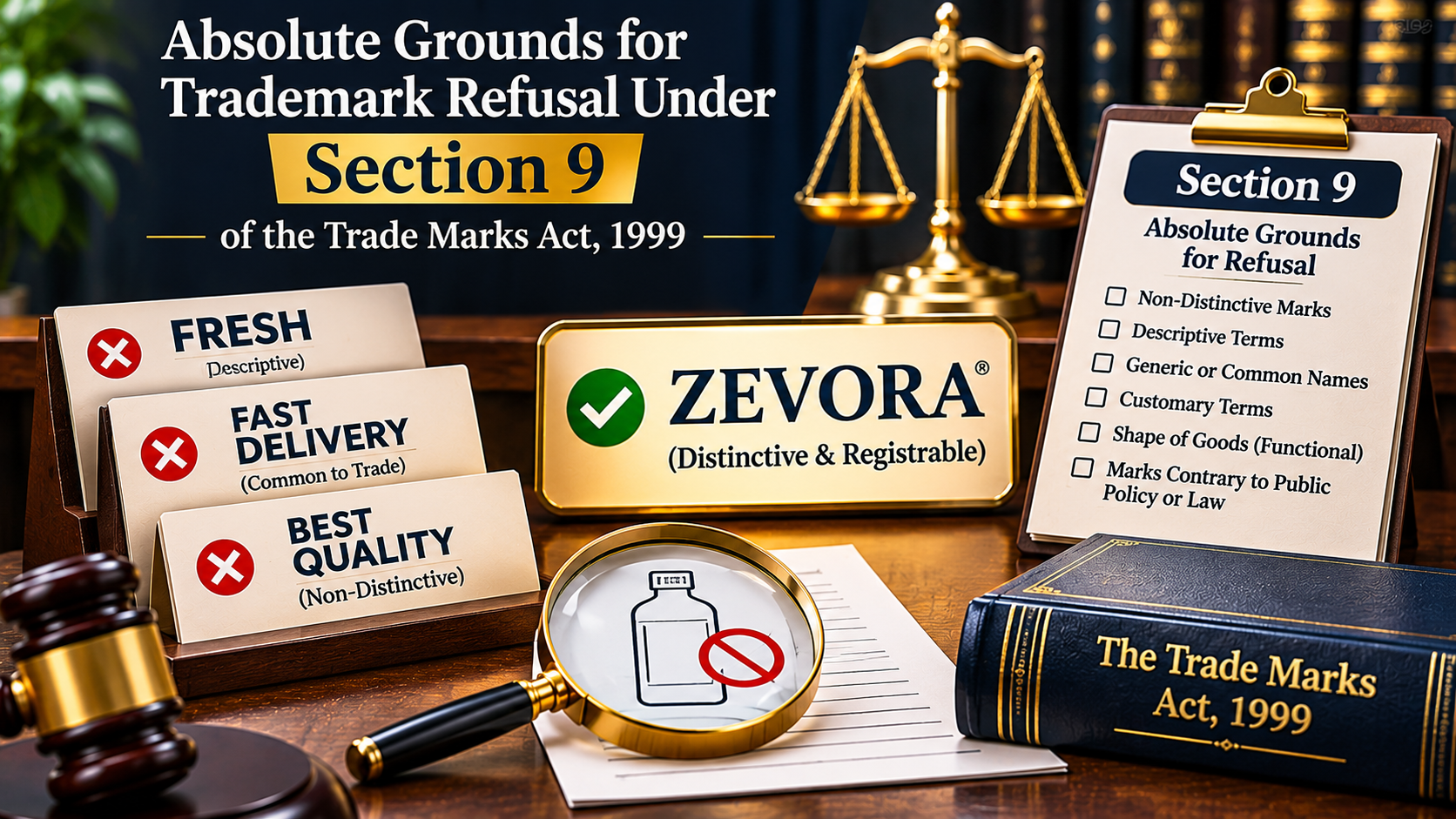
Understand absolute grounds for trademark refusal under Section 9 in India, including non-distinctive, descriptive and…

Understand trademark application amendments in India under Section 22 and Rule 37, including what corrections…

Avoid common Indian trademark filing mistakes involving distinctiveness, searches, class selection, ownership, prior use, examination…

Learn how to claim prior use in an Indian trademark application, including Rule 25 affidavit…
Compare single-class and multi-class trademark applications in India, including per-class fees, benefits, risks, specification strategy…
