
Motor Accident Compensation Claims in India: Damages,…
Important Disclaimer: This article is for general legal information and educational purposes only. It is…
EXCELLENT Based on 66 reviews
 Posted on Google

 Nabeel AkhtarFacing a criminal case can be stressful, but Advocate Nikhil Rathod made the entire process manageable. His strategic approach and strong representation gave me great relief.Posted on Google
 Srinath KarliAn experienced and sharp lawyer. Truly fast and great precise advocacy services offered. Highly recommended! Thankyou.Posted on Google
 SHIVA GAIKWAD
Trustindex verifies that the original source of the review is Google.
Good experience 👍👍👍👍Posted on Google Mangesh LawandeBest advocate for getting justice in Pune he is a very kind by nature 😊✨💫
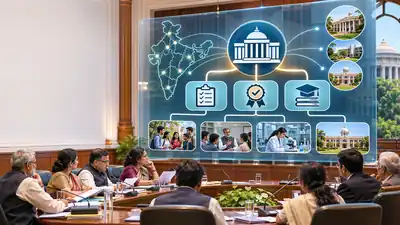
Legal position checked as at 11 November 2026. The Viksit Bharat Shiksha Adhishthan Bill, 2025 proposes a new regulatory architecture for Indian higher education. It is not yet law. Introduced in Lok Sabha on 15 December 2025 and referred to a Joint Parliamentary Committee, the Bill remains under committee consideration. No commencement notification has been issued. Universities must therefore continue to comply with the existing UGC, AICTE, NCTE, State and professional-council framework.
This article examines the Bill’s main clauses and practical implications, rather than repeating the general overview in our Higher Education Laws in India 2027 article.
The proposal is Bill No. 194 of 2025. The Joint Committee’s published record lists clause-by-clause consideration in July 2026, an agenda item for consideration and adoption of a draft report on 17 July, and further stakeholder hearings on 25 August and 11 September. As at 11 November 2026, the Bill is still listed as In Committee. No enactment or commencement notification has been identified.
Read the official Lok Sabha Bill text, the Ministry of Education’s 15 December 2025 release, the Joint Committee meeting record and the PRS Bill tracker. The Bill says it would commence on a date appointed by Central Government notification in the Official Gazette. No university should assume a 1 January 2027 or other start date.
Clauses 5–9 propose a body corporate called the Viksit Bharat Shiksha Adhishthan. It would provide strategic direction, coordinate the three Councils, develop a roadmap for multidisciplinary institutions and advise Central and State Governments on higher education. The proposed composition is a Chairperson and up to twelve other members, including the Presidents of the three Councils, the Union Higher Education Secretary, State higher-education representation and experts.
The introduced Bill does not give the Commission or its Councils a general power to distribute grants to higher-education institutions. Clause 38 concerns grants to the Commission itself. The future mechanism for institutional funding must be assessed from the final Act, Ministry schemes and other applicable laws; institutions should not assume that existing grants automatically transfer to the new body.
Clauses 10–12 propose the Viksit Bharat Shiksha Viniyaman Parishad as the common regulator. Its functions would include compliance monitoring, graded autonomy, student grievance redressal and public self-disclosure. Institutions may have to publish information about governance, finances, audits, infrastructure, faculty, courses, accreditation and educational outcomes through a public portal and their own websites. The text also contemplates corrective action within sixty days in specified cases of dishonest disclosure or academic, administrative or financial impropriety. Only suitably accredited institutions complying with regulations would be permitted to offer open, distance, online or digital education under the proposed framework.
Clauses 13–14 propose the Viksit Bharat Shiksha Gunvatta Parishad. It would develop an outcome-based institutional accreditation framework, empanel or remove accrediting bodies, monitor their performance and publish accreditation information. Institutions would be expected to prepare an Institutional Development Plan identifying objectives, educational inputs, outcomes, initiatives, resource allocation and timelines.
Clauses 15–16 propose the Viksit Bharat Shiksha Manak Parishad. It would determine minimum academic standards, learning outcomes and graduate attributes, and develop qualification, credit-transfer and equivalence frameworks. The Bill also contemplates standards relating to curriculum, pedagogy, assessment, student support and faculty qualifications. These are broad frameworks; the final balance between common standards and institutional academic autonomy will depend on the enacted law and regulations.
Clause 17 proposes that degrees may be conferred by a university, an institution specially empowered by Parliament, or an institution authorised under the proposed Act. The Regulatory Council could authorise an accredited institution other than a university to grant degrees, subject to regulations and prior Central Government approval. The Bill also contemplates colleges progressing towards autonomous degree-granting status after meeting accreditation benchmarks.
Clause 12 would require prior Regulatory Council approval for constituent colleges, off-campus centres and multiple campuses. The Council would also specify standards for select foreign universities operating in India, subject to prior Central Government approval, and facilitate high-performing Indian universities establishing overseas campuses. These proposals do not replace approvals required today under university statutes, State laws and current UGC regulations.
Clause 2(3) excludes specified professional programmes regulated by separate statutory bodies. The introduced list includes programmes regulated by the Pharmacy Council of India, Bar Council of India, Veterinary Council of India, Rehabilitation Council of India, National Medical Commission, National Commission for Indian System of Medicine, National Commission for Homoeopathy, National Commission for Allied and Healthcare Professions, National Nursing and Midwifery Commission and National Dental Commission, along with other bodies or programmes that may be notified.
Architecture is treated differently: institutions under the Architects Act are included for higher-education coordination and standards, while the Bill preserves the Council of Architecture’s professional-practice role. Universities offering both general and professional courses should prepare a programme-wise regulator matrix; one excluded course does not necessarily exclude every other programme offered by the institution.
Clause 33 proposes staged enforcement. After notice and an opportunity to rectify, an initial contravention may attract a penalty of not less than ₹10 lakh. A further contravention may attract not less than ₹30 lakh and recommendations concerning responsible personnel, autonomy or grants. Persistent contravention may attract not less than ₹75 lakh and recommendations affecting degree rights, affiliation or closure. Establishing an institution without required approval is proposed to attract a penalty of not less than ₹2 crore together with immediate closure.
The Bill says penalties should not adversely affect students. Clause 37 proposes an appeal to the Central Government. Clauses 45 and 47 provide for Central Government policy directions and supersession powers subject to stated conditions. These provisions raise questions about regulatory independence, procedural fairness and federal coordination. They are proposals only; universities remain subject to existing enforcement provisions until any new law is enacted and commenced.
Clause 54 proposes that the UGC, AICTE and NCTE continue operating until the new Commission and Councils are established. Clause 55 proposes repeal, from a date appointed by Gazette notification, of the UGC Act, 1956, the AICTE Act, 1987 and the NCTE Act, 1993. The proposed savings provisions would preserve specified actions and existing standards until replaced.
Approvals, pending applications, inspections, accreditation decisions, employment arrangements and court or tribunal proceedings should not be assumed to disappear. Their treatment will depend on the final legislation, rules and commencement notifications.
| Subject | Existing position on 11 November 2026 | Proposal in Bill No. 194 of 2025 |
|---|---|---|
| Regulators | UGC, AICTE, NCTE, State laws and professional councils operate within their jurisdictions. | Apex Commission with Regulatory, Accreditation and Standards Councils; repeal of three Acts is proposed. |
| Accreditation | Existing accreditation mechanisms continue. | Outcome-based framework and oversight of accrediting bodies. |
| Disclosure | Current statutory and regulatory disclosure duties apply. | Expanded public disclosure of academic, governance, financial and institutional information. |
| Student grievances | Existing UGC and regulator-specific grievance mechanisms remain in force. | Free and transparent grievance mechanism under the proposed common regulator. |
| Penalties | Existing regulator-specific enforcement provisions apply. | Staged minimum penalties and possible action affecting autonomy, degrees, affiliation or closure. |
| Transition | Existing regulators remain operational. | Continuation and savings provisions, subject to enactment and commencement. |
Universities and colleges can use the VBSA Bill 2025 – Institutional Readiness Checklist for 2027 (PDF). It covers current approvals, programme-wise regulator mapping, disclosures, accreditation evidence, campus permissions, student protection and legislative monitoring. It is a planning aid, not a statutory filing form.
No. As at 11 November 2026, it remains under Joint Parliamentary Committee consideration.
The Bill proposes a replacement framework, but no date can be assumed without enactment and Gazette commencement.
The Regulatory Council would regulate, the Accreditation Council would oversee accreditation, and the Standards Council would deal with academic standards.
The introduced Bill does not give the Commission or Councils a general HEI-grant distribution function. Clause 38 concerns grants to the Commission itself.
Clause 2(3) excludes specified professional programmes regulated by separate statutory bodies, including the Bar Council of India and National Medical Commission.
The Bill proposes authorisation for certain accredited institutions, subject to regulations and prior Central Government approval. It is not a present entitlement.
The introduced text proposes minimum penalties of ₹10 lakh, ₹30 lakh and ₹75 lakh for successive contraventions, and at least ₹2 crore for unauthorised establishment, with other possible measures.
Yes. Existing statutes, regulations, State laws and approval conditions continue to apply unless lawfully amended or replaced.
Not entirely. The Bill includes architecture institutions for higher-education coordination and standards while preserving the Council of Architecture’s professional-practice role.
Maintain approvals, map regulators programme by programme, organise accreditation and disclosure records, review student grievance systems and monitor the Bill’s status.
The VBSA Bill, 2025 is a proposed structural reform, not a present replacement for India’s higher-education statutes. Its three-council model could reshape regulation, accreditation, standards, disclosure and institutional autonomy if enacted. Universities should continue complying with current law while preparing records and transition plans that can be adapted to the final Act, rules and commencement notifications.
+91 820 890 9423
desk@tridentlegal.in
Flat No. 302, Kalunkhe Niwas, Khopade Nagar, Gujaewadi, Katraj, Pune - 411041


I was really impressed with Trident Legal and Advocate Nikhil Rathod. Even though they just started,
Trident Legal and Advocate Nikhil Rathod are really good at what they do. Even though they
I had a great experience with Trident Legal and Advocate Nikhil Rathod. Even though they are
Trident Legal, with Advocate Nikhil Rathod, is like a rising star in the legal world. I
I was lucky to work with Trident Legal and Advocate Nikhil Rathod. Even though they just
Trident Legal and Advocate Nikhil Rathod are really amazing! They helped me with legal stuff and
Trident Legal and Advocate Nikhil Rathod are like superheroes! They are really good at legal stuff
I wasn’t sure about Trident Legal because they are new, but they surprised me! Advocate Nikhil
I had the honor of working with Trident Legal and Advocate Nikhil Rathod. They were really
Trident Legal, led by Advocate Nikhil Rathod, is like a superhero in the legal world. Even

Important Disclaimer: This article is for general legal information and educational purposes only. It is…
Learn how to send a legal notice in India by post, Speed Post, courier, email…
Ignoring a legal notice does not automatically make you liable. Learn the legal consequences, statutory…

The Israel-Palestine conflict is a long-running dispute involving questions of territory, security, self-determination, displacement, settlements,…

A legal-status update on India's draft Seeds Bill 2025 and Pesticides Management Bill 2025, explaining…

The National Food Security (Amendment) Bill, 2026 remains a consultation draft. Understand the proposed AAY…
